Alita: Battle Angel

alita.jpeg

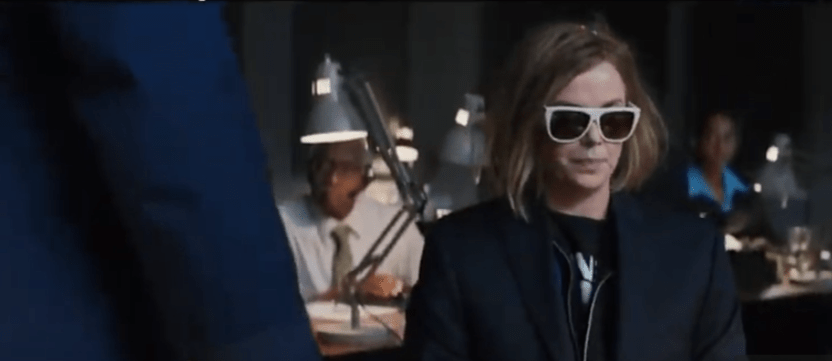
I was afraid that Alita would boil down to a cool special effect searching in vain for a story. And it was sadly just that. Not even the all-star team of Robert Rodriguez, James Cameron and Bill Pope could save this snake of story from eating itself. A homage to everything from Blade Runner to Ready Player One the remarkable visual effects creating the protagonist Alita, played by Rosa Salazar, particularly stand out in a fresh way. In fact, if you considered Alita simply from the point of view of the effects it would be a fantastic film. We watched in 3D and the depth of a few of the shots were sick without making us sick. Though some foreground elements did seem distracting at best. You would think that by now people would have gotten the hang of how to shoot 3D. Not yet. But compared to other 3D films, Alita seemed almost designed for the experience.

In the same way that the sum talents of the all-star filmmakers didn’t add up to a stellar film, all the effects in the world in and of themselves, didn’t make for a compelling story. There are plenty of interesting supporting characters but there are also obvious and cringe worthy tokens. And for a film co-written by a woman, it’s disappointing to note that Alita: Battle Angel glaringly fails the Bechdel Test. According to an interview with her in the Hollywood Reporter, co-writer Laeta Kalogridis likes to tell the story of how she got fired off Bionic Woman in part because she was told that she didn’t know how to write women characters. I don’t think the intention was that she stop writing them completely.  

The sort of Running Man meets roller derby aspect of the film to me is where credulity breaks. Where the film a la Arthur Herbert Fonzarelli on a waterski on a lake jumps the shark. It’s an obvious, and as D would say Deadpool would say, bit of “lazy writing”.  An absurd ploy for action that unnecessarily moves the film into “Feed the Hollywood Machine” territory. If the writers had as much faith in the life and stories of these characters as they do in computer generated imagery, Alita would have had a chance to breakout of the stockpile of special effects driven yawners. Note: Thankfuly it’s the end of Oscar season and we can expect some more interesting films to be released soon. 

If you are really into sci-fi or computer graphics driven films you might find Alita entertaining. I know we were actually highly entertained but mostly because we were saying the lines out loud about 10 seconds before the characters delivered them. 

Curiously, the only two other sentient beings in the massive theater were a man and his dog. The man was laying down across a few seats fast asleep but the dog seemed to be really into the ending credits. There is a scene in Alita where a pack of robotic dogs goes after a bad guy, so who knows, maybe the canine in your life would really enjoy this film. 

Cold Pursuit

CP_01

We ventured off to the eastern Appletonion tundra for an exclusive viewing of Cold Pursuit, one of the whitest movies you are ever likely to see.  L&D had our usual spectacular reserved seats, but being the sole souls in one of the Marcus spacious megaplexes, we were free to throw our hands up in the air and wave ’em like we just didn’t care and we said “oh, yeah!”  Not too shabby for $5.

The verdict for this one:  Revenge is a dish best served cold.  Really cold.  By Liam Neeson.  And for the most part, we really enjoyed what director Hans Petter Moland served up, and you will probably find plenty to enjoy here, too.  There are great visuals, some compelling characters, high comedy, and some thrilling, efficient violence.  But while the movie has many good pieces, these pieces just don’t add up to a great movie.

The biggest piece, as you know, is Neeson himself.  He plays Nels Coxman (giving us a second reason to break out the “cock” tag), a snowplow driver tasked with keeping the road clear from Denver to the skiing community of Kehoe.   He is a great guy, he’s the winner of the coveted Kehonian-of-the-Year Award, though we aren’t really sure why, which is one of the many added elements here that never quite adds up.

Mrs. Coxman is played by Laura Dern, or perhaps a mannequin that looks like Laura Dern — given a long blonde wig and a handful of quaaludes I could have probably played this part as well.  Her best line in the movie is her farewell card, which in retrospect was pretty funny, though at that point in the movie it wasn’t clear that this was a black comedy, so it wasn’t that funny.  And she wasn’t around to deliver the card anyway, so that was too bad. But, hey, Laura Dern!

The spawn of the Coxman union doesn’t hang around for long, either.   He works at the local airport and gets Taken™ under highly suspicious circumstances, sending the movie on its bloody white trajectory.

As in other Neeson projects, he has a particular set of skills — learned from listening to true-crime novels while he drives, perhaps? — that allow him to rub out bad guys and get to the bottom of things.  Clearly, the hook here is that he is a man of all seasons.

The rest of the plot is just all over the place.  The Denver drug kingpin, “Viking” (Tom Bateman), is like a gluten-free Quentin Tarantino, in looks and in propensities for clever wordplay and idiosyncratic ultra-violence.  Viking is a pretty high-quality villain.  He is in the process of divorcing his wife, and the two battle over appropriate dietary choices of their son, who is sort of like a Lisa Simpson character, listening to Bach and picking football games.  There are also a couple of points of intrigue amongst the Viking henchmen that are essential to the plot but that probably warranted either a little more or a little less attention.

As Neeson works his way up the Viking food chain, he enlists the help of his mustachioed brother, a reformed gangster gone straight thanks to an assertive and colorful Vietnamese woman.  His brother seems affable enough, so it’s not clear why the two were estranged?  Hard to say.   His brother’s wife (Elizabeth Thai) is one of the reasons you might want to buy a ticket to this movie.  She is a woman to be reckoned with and it’s a shame we didn’t get more of a reckoning with her.

Viking initially attributes the damage to his gang to a Native American gang that runs things in Kehoe, putting Neeson in the middle of a gang spat.  This is being monitored by the Kehoe P.D., featuring the set-in-his-ways veteran and the savvy young partner.

That is a lot of characters competing for attention, not to mention the supporting and incidentals cast.  We are also hit with a shotgun blast of literary referencing, with the movie kicking off with a direct quote from Oscar Wilde, then an allusion to a Robert Frost poem within the first few minutes, and then the dropping William Golding shortly thereafter.  L started taking notes on the back of his ticket stub just to try to keep us up to speed. It’s also probably notable that pretty much every named character has a nickname, The Eskimo, Santa, Speedo, Limbo, Santa, Smoke, Windex, and on it goes. I bet that fits together in a clever way, but I don’t think the payoff is big enough for me to actually dump the pieces on the table and figure it out.

I learned that this film is actually a remake of his 2014 film In Order of Disappearance, which Morland directed for the more exclusive Norwegian audience (I just put it on hold at APL!).  I suppose the reason you make a remake is to take advantage of Hollywood money and Hollywood stars, such as Neeson and Dern.   Yet the film, despite its outrageous outdoor visuals, isn’t shot on widescreen.  Why is that?

Overall, this is an ambitious project, but Moland unfortunately never quite got a handle on his narrative.  He genuflects to the Coen brothers (especially and obviously Fargo, but also No Country for Old Men for its meditations on uncertainty) and Tarantino (see above), while also exploiting Neeson’s particular set of tools for the everyman vigilante angle.  This is probably closer to Fargo the television serial than Fargo the Coen brothers classic, but two hours isn’t enough time to flesh out the likes of ten or so principal characters. And so Moland ultimately failed to make the hard choices about choosing a theme and tightening the narrative.  Coupled with the onset of Neeson’s own foot-in-mouth disease, this film seems to be queued up for its own disappearance from the public’s consciousness.


Serenity

jerry-stiller-as-frank-costanza-art

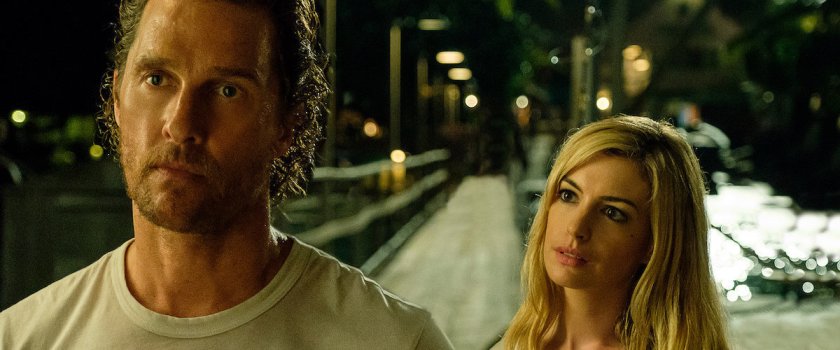
Rather than review Serenity, I would prefer to reflect briefly on a few questions that we were able to discuss during the last four-and-a-half hours of the resolution (where L rocked back and forth in his stadium barcalounger mumbling “serenity now, serenity now” to himself).  First, why wasn’t this done as a straight film noir?  It seems like there was plenty going for it without the idiotic turn (see L’s review).  The second question is one L posed just last week (maybe it’s something about January movies):  what makes a film interminable?  Serenity offers one possible answer, which is that making an idiotic turn prematurely can be the difference between excusable (see A Quiet Place)  and the never-ending story — this movie just would not end.  Third, what would compel Matthew McConnaughey to take this role?  Was it the awesome location in paradise and all of the flexing and fishing and, um…. yeah, the steamy and extensive interludes with Diane Lane and Anne Hathaway?  Was it the chance to smoke indoors (with some of loudest-burning cigarettes since Nick Cage in Wild at Heart)? The fresh fish?  The chunky paycheck? Is this really the best script he’s seen since Gold?

Anyway, try not to think too hard about any of this, because the more you reflect, the less you will like this movie.  Indeed, you may downright start to hate the movie and hate yourself for sort of enjoying it and wanting to talk about it.   If you just can’t help yourself along these fronts, stay home.

But if you a movie junkie and you do break down and go, L&D recommend that you channel your best Frank Costanza and just let it pass over you, like a warm tropical breeze tainted with a hint of cigarette smoke.

Mmmmm, I feel better already.

Serenity

hero_serenity-2019.jpg

ABSTRACT

Conclusions and Relevance  If you like watching Matthew McConaughey do anything or nothing at all with his shirt off, this movie was made for you. Further, if the idea of a topless Matthew McConaughey trying to reel in a giant tuna makes you involuntarily gnaw at whatever it is you happen to be holding in your hand then this is must see cinema. For the rest of us, not seeing Serenity will add 1 hour and 59 minutes to what poet Mary Oliver calls our “wild and precious life”.

With a TBI (Taco Bell Index) of 1, i.e., one car in the Taco Bell drive thru near the movie theater, Serenity was doomed from the start. Consequently it happened to be an extremely low turnout for opening night. Word must have gotten out. Do people read reviews? Or at least the headlines of reviews? In any case, I came in open minded and found there are actually a few things that Serenity has going for it. In terms of production design, it’s fantastic. The creation of Plymouth Island is impeccable down to the Maersk logo on the shipping container that professional fisherman Baker Dill (Matthew McConaughey) calls home. And it’s enough to throw you off in an interesting way. Examples: Speaking French but driving on the British side of the road. Caribbean style street vending carts and the typical pastel colors of that region but in a Polynesian landscape. Shrines to Hindu deities yet a constant spin of zydeco on the radio thrown into the mix. All to seal the idea of a place that is everywhere and nowhere. There is also some genre bending, with a noir drama meeting a psychological sci-fi thriller. Serenity is an elaborate Twilight Zone episode peppering you with some well-thought-out clues along the way. Solid performances by Anne Hathaway, Diane Lane, Jason Clarke, Djimon Hounsou and Jeremy Strong shore up this tangled web of McConaughey letting lose and going Full McConaughey — in the best way. 

So where does Serenity go sideways? I was going to say where does Serenity sink but my better half (not D, but rather my wife) informs me that I am too young to be making those types of jokes. However, I’m not too young to make dudity jokes, of which many were made at the theater as there is a fair amount McConaughey dudity (aka male nudity) as referenced in the abstract to this review. Back to the point being that the reveal, the twist, is exposed too soon. The denouement spreads into a facepalm inducing news reporter VO, then into a vomit-in-my-mouth-a-little inducing slo-mo hug of father son saccharine sap and mercifully crashes in an epilogue of a drone shot into the sunset. As the lights come up in the theater I commence with the head shaking. Why did the filmmakers let ACT III unravel like that? Was it a spell that McConaughey cast over them? I believe it was something to that effect. Not unlike the protagonist of this film, the filmmakers had a hard time viewing the story objectively. Some of this films’ strongest points come when issues of PTSD and existential epistemology are explored. But these lines of inquiry are quickly abandoned in favor of the noir yarn and so neither philosophy or McConaughey’s bare ass can cary the amount of credulity needed for this exploding can of worms narrative. In Serenity, the big one does get away. (Sorry, can’t help it.) Ultimately, as the TBI indicates, if you pass on Serenity you won’t be missing much. 

Ben is Back

Ben is Back Still.png

Ben is Back takes on a pressing issue in our society, the onslaught of opioids that have flooded our communities, as drug overdose deaths have tripled since 1990. This morning I was reading an article, “Massachusetts Attorney General Implicates Family Behind Purdue Pharma in Opioid Deaths” about a company so obsessed with sales that it paid 600 million in fines for intentionally misleading the public about the addictive qualities of OxyContin. The kicker being that even after that admission and pay out the company expanded its efforts, sending even more sales reps to convince doctors, nurses and pharmacists to prescribe even more Oxy. Why? For perspective, one company memo details how through overprescribing just two doctors made the company 800,000 in only two years. 

I believe Ben is Back will find an audience with the people and families who most need a message about addiction. Even though it plays like an extended Afterschool Special, with implausible situations that make you ask yourself, what exactly are the elements of an interminable movie? After a moving Christmas Eve mass scene, the plot shifts gears into modern day parable territory. A Dante’s Inferno meets Dickens’ A Christmas Carol mash up. It’s a good technique for the story but the pretext motivating the plunge back into the depths of Ben’s utterly messed up and devastating life choices seems flimsy at best for one so easily triggered. One character says out loud, “This doesn’t make any sense. What we are doing is not worth it.” I understand characters’ statements like this as a verbal agreement between the filmmakers and the audience. It goes something like, “We don’t actually expect you to suspend disbelief but if you don’t leave we can tell you what we have to say, which you will agree is a good message.” 

I am not saying that I could have come up with a more convincing story. Or that telling a story like this is easy. I actually sympathize with this film and feel like the filmmakers and actors were trying their absolute best. The film does boast powerful performances by Julia Roberts as Holly, Ben’s ever hopeful and grieving mother, Kathryn Newton as Ivy, the skeptical with reason sister and Lucas Hedges as a convincingly angsty Ben, who knows that there is little he can do in the face of this crippling curse, his addiction. The situation is as terrifying as A Quiet Place but even more so because we all know that this national scourge and personal tragedy is happening in real life as we speak.

In spite of the strength in the acting, production value and sentiment in this film, the parts don’t ever come together to form a greater whole. The cause is a meandering story that strains plausibility and telegraphs its plot points miles ahead of when they occur. However, this is an intelligent film with a lot of heart that also has the possibility of spurring on conversations around this most critical of social issues. It may not rise to the level of a classic family drama as say Ordinary People but Ben is Back will provide a powerful message for those closely dealing with the problem of addiction and as a cautionary tale for many others. 

Power

Power JPG.png

In the last calendar year and in this year so far, the political biopic, i.e., biographical movie, has been a constant movie occurrence. Or is it eternal? It seems we will always wonder about the lives of people who shape history. 

In this essay I cover some of the political biopics that caught my eye and moved me one way or another. Though there are others, the recent depiction of Winston Churchill comes to mind, that don’t make the cut here. 

But let’s take these: L and D’s top film of 2018, The Death of Stalin, Chappaquiddick, The Front Runner, The Favourite, Mary Queen of Scots, Vice and On the Basis of Sex. 

One of the foundational rules of filmmaking is to show, don’t tell. Just keep that in your back pocket as you read this. Another rule of thumb is that in a short film, having one strong protagonist is the best way to keep an audience involved in the story. And you can extrapolate that to features. It’s easier to keep the audience if your film isn’t meandering or involving many points of view. There are exceptions of course. The most recent Murder on the Orient Express had a fantastic cast and even though I deduced who the murderer was in the first 5 minutes it didn’t fail to captivate me as a story. A film can also cover many years and still be powerful, it’s just more of a challenge. Citizen Cane does a good job of it. As I said, there are exceptions. Now if it were just a case of dramatizing a given situation, some kind of winning formula, I wouldn’t have had one of my greatest movie going disappointments, Sully. Moments after take off a plane crashes into the Hudson River. The pilot is able to land the plane without loss of life. Sounds like an incredible movie but really, it’s just an incredible moment. There is no formula for a hit movie, just some guidelines. 

I won’t rehash our review of The Death of Stalin here. Suffice it to say, you get to know Stalin in the exposition. You witness his death. There is a mad power vacuum that ensues. Society, which was absurd and unjust during Stalin’s lifetime, threatens to absolutely unwind in the time shortly after his death. The performances are outrageously good. It’s a true masterpiece of dark humor and grim reality. It gracefully paints a portrait of one dramatic moment in time.  It trusts that you understand something of the workings of the Bolshevik revolution and something of what happens after the time in question. 

Chappaquiddick and The Front Runner are films that needed to come out around the time of the incidents they portray. They are past relevancy, poignancy.  They, Like Mary Queen of Scots, would have you support protagonists who are well past complicated and simply obstinate. I would say that the Mary Jo Kopechne drowning scene in Chappaquiddick is so powerful that you could never argue that the filmmakers are Ted Kennedy apologists but they are not far from it. And though that film does concentrate on a specific moment in time, the drama gets completely bogged down in rooms and meetings. It fails to show as it falls back on telling, on merely depicting people talking into phones and scheming. “But that’s what happened” you could argue. Well, it’s not cinematic. 

The Front Runner also gives us a clueless presidential candidate who seems totally out of touch with the times. But it does smack of apology for bad behavior. I will never get over how the defining moment for presidential hopeful Gary Hart was a trip on the boat Monkey Business but it is somehow not even the title of the film.  In the film there is a scathing one minute monologue by Johnny Carson via a TV set Hart is watching.  The entire film is summed up by Carson. Like Chappaquiddick, Front Runner tries to milk this one defining moment and devolves into representations of phone calls with his wife and spin meetings with his staff.  Talking not showing.

Mary Queen of Scots certainly does a fine job of depicting action. There are plenty of horse rides, a battle, a stabbing and even a decent explosion. But if you have a political character that’s not likable, whose motives aren’t honorable or who feels entitled and again, out of touch with the people, all the action in the world will not save that story. There is also plenty of staring into space by the protagonist, the movie seemingly falling in love with its very existence. There is also no backstory whatsoever besides titles. I’m not sure if titles are even worse a sin than talking vs showing in film. Again, there are always exceptions, like the opening titles of Star Wars. One of the more interesting aspects of another film I will get to, Vice, is the depiction of the early, more formative years of Dick Cheney. You may never agree with him but you understand where he is coming from and his drive for power. This never happens with Mary Queen of Scots. The audience never gets invested in her story. 

Which brings me to the aptly titled, The Favourite.  The audience here is instantly invested in the fortunes of a former lady as she attempts to regain her status in proper society. As the intrigue at Kensington Palace thickens the feeling of suspense only grows. There is plenty of blood and guts, scars and plain ol’ wild outbursts in this film. You understand exactly the perils which the protagonist must endure, the indignities she has to suffer and the level of cunning needed to ascend. It’s a startlingly good performance by all of the main players and easily a top L & D 2018 pick had it been released sooner. But to go over what works, it focuses on a main protagonist, during a specific time period with well established obstacles and goals. As each scene should have obstacles and goals for the players so should each film for its story.  It’s completely cinematic at every opportunity and lets the audience sympathize with the plight of the protagonist and share in her plots, schemes, victories and defeats. There are moments when the star of this film stares off into thought, but those are moments of gravitas that are not overused and therefore dulled or self-serving. 

I had high hopes for Vice. It starts off strong enough, as we discover the ne’er-do-well Dick Cheney. The man is a simple mess, looking at life through the bottom of a beer bottle. This really sets the story up nicely. However, it goes off the rails, at once blaming Cheney for every ill in society since 1974 and trying to excuse his politics. The side splitting laughter of then secretary of defense Rumsfeld when asked by Cheney, “What do we believe in?” is all you need to know. It’s tough for an audience to get behind a character whose own moral compass blows with the wind. And perhaps to answer why he did what he did in a word would be — power. Because he could. The yin to the yang of Alex Honnold free solo climbing El Cap is Cheney being the puppet master behind the 2003 Iraq war.  

Vice’s meandering is quite unlike On the Basis of Sex, which is a beautiful and elegant movie that surprised me with a succinct narrative. Cinematically told with great period shots of Harvard, Denver and New York City. Focusing on Ruth Bader Ginsburg’s days at college, starting out as a professor and eventually arguing a case before a federal appeals court.  It didn’t try to cover all of her cases and therefore the story never gets muddled. It stays specific to one early case, complicated enough to be interesting yet simple enough to be enjoyable. And obviously we follow the one main point of view, Ruth Bader Ginsburg’s, as it evolves into the voice of a generation who fight to set a new legal landscape for women in America. 

So power can be represented in many ways. There is no formula for a successful political biopic film. But there are things that work. Letting the audience get to know the characters, their early lives and motivations. Remaining cinematic throughout the film and not getting bogged down in conversations and static shots of one actor on a phone in a small room. Understanding that one event alone does not make a film. Not trying to cover too much historical ground but creating a story around specific defining moments. Establishing a few simple obstacles and goals that the audience can be involved in as the protagonist strives and achieves. Is it easy to make a great film? It’s not easy.  But it’s fair to say that of this most recent slew of biopics only a few filmmakers have been able to surpass this high bar. 

Vice

L&D took advantage of some Marcus Rewards to see Vice on bargain Tuesday,  and after some minor hiccups with the cashier, we made it in to see an alarming trailer of an upcoming Topher Grace film, Breakthrough.   In good trailer tradition, we now know the plot pretty much exactly, and L&D will likely be able to skip that one altogether.

Of course, we were there to see Vice, writer-director Adam McKay’s portrait of former Secretary of Defense and Vice President, Dick Cheney, and we thought we pretty much knew what was going to happen in this movie, too.  So, really, we were there to see if Christian Bale’s portrayal is all that it’s cracked up to be — it is, he’s brilliant and gets it right, the pause, the sneer.  Bale is not the only big, big star here, with Amy Adams playing Lynne Cheney, Sam Rockwell as George W. Bush, and Steve Carrell as Donald Rumsfeld.   Adams is very good and Carrell starts out really strong and fades a bit, while Rockwell doesn’t really get much to work with beyond something just above an SNL-type portrayal.  Good work if you can get it.

The movie is fine, really, funny in parts — the first end-credits bit was pretty clever — but ultimately it turns into a polemical hit piece on Cheney.  This is somewhat amusing because the film makers were obstinate that this was based on the facts.  Even if that were true, which it probably isn’t, there are many facts that are omitted, on the one hand, and many connections that are somewhere between tenuous and ridiculous.

On the first part, consider the complete omission of the Iraq war under President George H.W. Bush.  It was during that war that Cheney and General Colin Powell emerged as a tandem with real star power.  Here’s the take of Slate’s, Fred Kaplan, who certainly knows plenty about Cheney’s career:

The film …barely mentions the first Gulf War, during the presidency of George H.W. Bush, when Cheney was secretary of defense. This is no small matter: The fact that the elder Bush won that war but left Saddam Hussein in power had an influence on how the younger Bush and Cheney viewed the second Iraq war a decade later.

Another reason for McKay’s brush-off of the first Gulf War may be that dealing it would have forced him to confront the fact that, even by the estimate of his critics (including me), Cheney oversaw that war—and handled his duties as defense secretary broadly—with open-minded professionalism. McKay begins the film by having his narrator say that when Cheney became vice president, nobody knew much about him. In reality, he’d emerged from the Gulf War an admired celebrity. In his many press interviews at the time, he came off as an emblem of cool competence…

This is why so many people who observed Cheney under Bush Sr. (including me) were so stunned and puzzled by his fanatical turn under Bush Jr.  What changed? Had the three heart attacks blocked some of the oxygen to his brain? Was it the sheer scare of Sept. 11? Was it his belief that, in the wake of its Cold War victory and the Soviet Union’s implosion (an important contextual event the film ignores), the United States could get away with a more aggressive foreign policy and, therefore, should? In the film, from the time of his ascent to high power on, he undergoes no change and thus there’s no need to explain it.

That is my emphasis in spots, because I really couldn’t agree more with those quotations.  I lived in DC during the bulk of the first Gulf War, and remember watching the Cheney-Powell show with some legitimate DC insiders.  He was masterful and definitely admired from both sides of the aisle, regardless of what your thoughts on that war were.  That entire Kaplan piece is a pretty good summation of my view on the “facts” in this one.

As far as the second point goes — some of the conclusions the film makers seem to draw about Cheney’s influence — it seems unlikely that Cheney is responsible for political polarization, ISIS, global climate change, the California wildfires, and the rise of Fox News, but I suppose it’s possible.  The expansiveness of the indictments and the black-hat, white-hat nature of the narrative is degrading to those in the audience with cerebral capabilities.

In the end, you might enjoy it no matter your politics.  I talked to someone today who said that their conservative father thought the movie was “satire,” rather than a biopic.  It has its moments.  It certainly has more than it’s share of star firepower.

The Favourite

the fave emma stone.jpg

As D mentioned right after we watched it, The Favourite was the best film this year in its depiction of power relationships. I would agree, though our top pick, Death of Stalin and another great one, Phantom Thread, went a long way in that regard as well. 

The Favourite goes for it in terms of artistic license and cinematic technique: stylistically, in its depiction of sexuality, choreography and language.  It is a bold film. Yet its visual style at times didn’t work for me. Panning on a Steadicam with an ultra wide lens on, unless you are after some type of motion sickness, is not a great idea. We get it, Kensington Palace is massive, you want us to see that. Okay. But just trade up a few focal lengths, stop down a smidge so you can keep deep focus, and guess what, Kensington Palace is still massive!  Steadicam does achieve a sort of sweeping kinetic energy and those shots were reminiscent of the masterful Russian Ark (2002) — a feature film shot at the Hermitage Museum in Saint Petersburg, accomplished in one historically long shot. Russian Ark is impressive to say the absolute least. However, I don’t think it was necessarily the best technique to employ for The Favourite and it did seem to me that as the film moved on it was used less and less. However, this particular technique wasn’t the end of the world for me, I prefer bold choices in production. It’s just a choice I would have adjusted or used sparingly. Royal intrigue to me plays much better on a tripod or a dolly. Something more stable. But Queen Anne is so unstable! you might opine. —But is she? 

With the Steadicam following Abigail (Emma Stone) around, I half felt like I was in some type of time warp reflection of the Iñárritu masterpiece Birdman, where Stone plays Michael Keaton’s somewhat reckless but also caring daughter Sam, a recovering drug addict. Another masterful performance. There are few actresses who can hold an entire film together with so little as a fleeting glance, Emma Stone is one. In fact, Stone’s performance here is so strong that if she is not nominated for an Academy Award, I shall have to relive myself in the royal vomit bucket— there is apparently one in every room of the palace.

The Favourite moves right along, with many eyebrow raising twists and turns. And with Olivia Colman playing Queen Anne, the puppet master between Abigail and Lady Sarah (Rachel Weisz) most skillfully, nary a moment is lost in this tightly spun narrative.  

It may have slid in too late for our 2018 best of picks but The Favuorite would have been right in there with the top contenders. 

L&D Picks & Pans for 2018

thumbnail

It was a pretty good year for movies in east-central Wisconsin, so grab a chalupa and see how the L&D staff saw things this year.

Most Read Review:  We almost wet our pants in anticipation of Lady Gaga and Bradley Cooper in the newest incarnation of A Star is Born, and evidently it was a crowd fave, too. The page views still pale in comparison to those for Mother!, L’s brilliant takedownof this most-terrible Daron Aronofsky film.

The Double Reviews:   These are films that were compelling enough that we both penned reviews – Deadpool 2 (L, D) and Crazy Rich Asians (L, D).  Both worth seeing, though neither made either or our top ten lists.

Documentaries:  We don’t see a lot of documentaries coming through the Marcus chain, but Free Solo and They Shall Not Grow Old each came through and each came through big time.  The former documented an extraordinary event and the latter was an extraordinary event in and of itself.

The Worst of the Year:   D has perhaps seen one too many CGI superhero movies and wishes he would have sat Aquaman out.  It makes those X-Men movies seem understated and coherent.  L couldn’t get past the fact that a movie about Gary Hart wasn’t named Monkey Business and put The Front Runner as his worst of the year (though I thought Chappaquiddick was actually even worse).  In fairness to these movies, we didn’t see the new incarnation of Sherlock Holmes, which by almost all accounts is a complete disaster.

Box Office Don’t Lie:   Venom wins this one hands’ down for being panned while generating revenues of nearly $1 billion.  Although I generally enjoyed the film, I will give a hat tip to First Man for missing its chance to tell us something we didn’t already know about Neil Armstrong.  Is she still mad at him?

Notables:  Although the political biopics were worse than disappointing, we were treated to some exceptional storytelling with both BlacKkKlansman and I, Tonya.   Old Man & the Gun wasn’t bad, either.  Look for more in the Top Six.  We also saw some funny movies this year that we didn’t expect would be that funny, including Blockers, which was really funny, and Book Club, which was also really funny.  Plus, it had Jane Fonda.  Of course, if you have learned anything from reading this blog, it is that you need to manage your expectations.  In that spirit, we found a lot to like in this year’s best action movie, Mission: Impossible: Fallout, which featured some really innovative and spectacular action shots and set locations, including a new way to show someone falling out of a helicopter.  Kudos.

Best Movies Not Mentioned Yet:   Bad Times at El Royale sets a blistering pace that it fails to sustain, but it is a very good effort and a movie we both plan to see again.  Widows is also exceptional and the car ride across the Flanagan district might have been my favorite scene of the year.   If you get a chance, you should also see The Ballad of Buster Scruggs.  Come for The Franco, stay for Liam Neeson.

As for our Top Six, here we go:

#6 & #5  Can You Ever Forgive Me?  and Green Book (L) Another lesson we’ve learned is don’t trust the trailers, and we hesitated to even see these movies because the trailers made them out to be something that they weren’t.   These two films even more in common than bad trailers, so much so that L penned a joint review:  “These films are Oscar worthy in various artistic and technical categories. If you are looking for funny, deep, thought provoking, well-crafted, historical and yet personal films to watch, I recommend Can You Ever Forgive Me? and Green Book to you.”

#4  Free Solo (L) “If you take the time to watch this movie it’s something that will actually give back to you and enrich your life. There are not many movies you can say that about. And definitely catch it in the theater so you can truly appreciate the scale of this almost unimaginably epic undertaking.”   Or buy yourself a projector and show it on a really big sheet at home.  Unimaginable is the perfect word choice for Alex Honnold’s feats of strength.

#3  Phantom Thread (D) “The bottom line is that you can take the movie at face value and you will find it beautiful and possibly that it has a lot to say about cut-throat competition in human interactions…  But I would urge you to have an open mind about this being a comedy, because the movie is seriously hilarious… [We] encourage you to check it out because it is beautiful, awesome, hilarious, and may well be Daniel Day-Lewis’ last role.”

#2  Eighth Grade (L)Eighth Grade is a masterpiece. It’s a simple as that. I don’t know what’s in the water that writer director Bo Burnham is drinking but I would like to splash a little on my neck… While chronicling the life and times of 13 year old Kayla Day (Elise Kate Fisher) you never feel imposed upon. There is never some heavy hammer here. Just like social media itself, like a snake, it slowly envelops its prey and before you know it, you can…not…breathe.  [T]he real triumph of the film is that it can at one hand painfully and accurately represent the struggle of this age and at the same time entertain the audience every step of the way. Having us wonder what on earth will happen next. ”

Short-listed for loudest film of the year — you should see this in the theater for no other reason that you can’t turn the volume down!   There is no escape.  A metaphor for adolescence if there ever was one.

#1  Death of Stalin (D) Ostensibly a black comedy, though it is perhaps still too soon.  Great acting from Jeffrey Tambor, Steve Buscemi, and especially Simon Russell Beale, “who is other-worldly in his role as the head of state security, Lavrentiy Beria, with a performance that is so convincing, so troubling, I was physically unsettled for most of the film.”

“But It’s fair to say that the movie is more than a sum of its acting, as the set pieces, costumes, and general tenor are all convincing and excellent, and contribute to the unease that certainly will fill any thinking person… Buscemi as Khrushchev emerging as the voice of reason is both a relief and horrifying all at once… So, big, big ups from L&D, with the caveat that maybe it’s better not to think to hard about the fact versus fiction in this one, as the facts are probably even worse than what this movie shows and implies.”

The ups are so big, in fact, that is L&D’s movie of the year.

IFFR2018-Review-DeathOfStalin-main

So, that’s 21 movies listed here we liked, and three that we didn’t.  If you see any of these, please let us know what you think.

If you’ve gotten this far, thanks for reading.   We appreciate the support — tell a friend, tweet the review if you like it.  And, thanks to Marcus Theaters for its remarcable Tuesday and Thursday specials.  We wouldn’t do it without you.

Aquaman

rev-1-AMN-TRL-89421-UM_High_Res_JPEG
Yes, that’s soldiers riding on sharks.

L&D continued our busy December with tickets for the late opening-night showing of Aquaman this past Thursday.   Regular readers probably know that we don’t particularly like trailers and try to time our arrival right for when the Marcus Theater promotion hits the screen.  This turned out to be something of  a problem, as the building was locked when we arrived, and we had to wait a good five minutes before an errant customer finally exited the building, allowing us to get into the theater and to our seats during the opening aquarium scene starting around midnight.

Well, let’s just say that we probably would have been better off had we remained locked out the the building.  The movie is spectacular and it is a spectacular mess.  By 12:20 I was looking at my watch.  At 12:45 I almost asked L if he wanted to leave.  After that, I just kicked back in my recliner and got what I deserved from expecting more from a DC movie.

So what about all of those critics and fans who say this is a triumph?   I’d say, yes, Jason Momoa plays the title character with gusto.  And, yes, the underwater visuals are pretty “trippy.”  Actually, the above-water visuals are pretty outstanding, too — I’m definitely up for a trip to the beach.  And, yes, it is an action packed affair.

But, there’s always a big but…

This story?  Really?  It’s a combination of canned story (evil stepbrother, disputed line to the throne, quest for world domination) and make-believe backstory rubbish thick enough to make the writers of the Star Wars prequels blush.  Even if there are seven kingdoms of Atlantis, do we have to visit all of them and have the evil stepbrother (Patrick Wilson) carry out a gratuitous execution followed by a series of explosions at every one of them?  It’s like Thor and Loki meet Jar Jar Binks and Kylo Ren (Black Manta?).  At least there were no annoying alien sidekicks in this one.  Even the extra scene during the credits is a disappointment:  that guy was mad before, but he’s really mad now.  Sorry for that spoiler.

As for the acting, aside from Momoa, the script doesn’t really allow for much.  L&D favorites Willem Dafoe and Nicole Kidman are both in the movie and both remarkably forgettable.  Is that fun for them?  Were they even in it?  Or is it just a CGI recreation?  Maybe we can ask next time they are in town.

What we are left with is $200 million in beautiful visuals and lots of drama-free action, and I just shake my head and wonder what could have been.  It amazes me what some of the most talented people in the world choose to spend their time doing. The recommendation for this one is to keep your money in your pocket.  On the other hand, “box office don’t lie!”  But, in this case, it might be telling you a little bit of a fib.