Richard Jewell

share.jpg

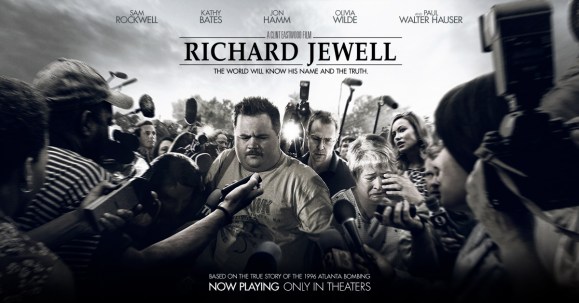
I was mesmerized by the performances and by this standard alone I recommend Richard Jewell.  It’s satisfying to see a film that can rely and succeed almost entirely on the great work of its actors. Richard Jewell boasts some of the best actors in the world including Cathy Bates and Sam Rockwell, laying their talents and hearts on the line for us. 

I didn’t know the story of Richard Jewell or any of the details in the 1996 Summer Olympic bombing in Atlanta, so that was intriguing in and of itself. Furthermore the film is pertinent in terms of the FBIs’ abuse of power. When a secret court system like one we have here in the U.S., called FISA, calls you out in the press, like it did to the FBI this week, you know you have some issues. But hasn’t the FBI always had issues? How about the executive branch and Congress? Another great story from this week that got very little attention was how since at least 2003 the government has lied about how the war in Vietnam, I mean Afghanistan has been going. The film does not let the press off the hook either. Though the director of this film famously married and then divorced a reporter so who knows, maybe he has a personal axe to grind? One of the main takeaways from Richard Jewell is how little things have changed in U.S. society in the past 23 years. This is the system we live in and this is our human nature, so only the players change as the situations must by and large remain relatively the same. It’s nevertheless a cautionary tale worth heeding. 


LnD Playing Catch Up

keep-calm-and-let-s-catch-up-1.png

Life has gotten in the way of writing for LnD but as a way to play catch up here are a few reactions to films we’ve recently watched. 

If you loved Zombieland, which I thought was a great movie, then you really have no reason to miss Zombieland: Double Tap. It’s a fun movie whose stars get to let their hair down from their more demanding roles and just pull the trigger (twice). If zombie killing really isn’t your cup of tea, then no amount of humor is going to help this medicine go down. Zombieland: Double Tap, essentially being a continuation of the original, made me think about original films we have seen this year. If you are looking for a fantastic performance based on a true story, look no further than The Mustang. Executive Produced by Robert Redford this film chronicles the real life prison rehab program that trains inmates on how to break wild mustangs. The horses are then, during one yearly auction, sold to police departments around the country.  It was a powerful film with a stand out performance by Matthias Schoenaerts. 

We saw several house location (if that is not already a genre it is now) based dramas involving the wealthy. One was the forgettable Ready or Not with a clunky plot that took its two dimensional characters nowhere but to absurdity.  And the other was Knives Out with a refreshing storyline and amazing performances by Ana de Armas and Daniel Craig. If you are into whodunits, do yourself a favor and check out this movie.

The other standout in this invented genre is Parasite. This movie essentially blew my mind and will easily land in my top 5 films of the year. The fact that it only screened here in Appleton, WI at 4:pm for a day is just a shame. We were lucky that D is all over scheduling like a claw in a sprocket (obscure film projector terminology) and caught it. My own film Anger (shameless plug) played at the Weyauwega International Film Fest and was followed by Parasite — but those were the only screenings of this gem in this area.  If it comes down to a fight for screen space around here then I say Frozen II be damned. I’m not actually going to write about Parasite because I would hate to give anything away plot-wise. It is a home based story as I mentioned, and we noted how infrastructure is ingeniously used as metaphor in the film. I’m guessing that like Moonlight, after it wins the Academy Award the multiplex bean counters (biting the hand that feeds me) will decide it’s time to bring it back to Appleton. Parasite is a fascinating work and an instant cinema classic. 

I thoroughly enjoyed Ferrari vs Ford, or is it Ford vs Ferrari? The Cinematogtaphy in this racing film was astonishing and I was riveted by the fantastic performances of Matt Damon — who is at his best here — and Christan Bale. The cars are shiny and fast but what makes this film memorable is that it is really about the great bond of two friends hell-bent on making history and pushing the envelope of the human experience. 

Terminator: Dark Fate was entertaining. I think it got a bad rap and was underestimated for not being historically correct in terms of previous films in this series. But at some point in a series with time travel you get into a Back to the Future scenario and if you can’t suspend disbelief then you will never enjoy the film. It is a movie after all and not a documentary on artificial intelligence and the time/space continuum.  If you want an entertaining movie with lots of action and strong female leads who know how to kick- ass, this film will not let you down. 

I happened to catch The Laundromat on Netflix. I watched it without knowing what it was about and I think you should watch it that way too. There are great performances here by Meryl Streep, Antonio Banderas and Gary Oldman and it’s certainly worth checking out if you are looking for some great acting and a thought provoking story. 

We are all caught up now. Our best films of the year list is coming right up.

Jexi

Jexi.jpg

Jexi is the slapstick comedy version of Her and if you go into it with low expectations you will be surprisingly pleased. I don’t know what’s crazier, that a smartphone would hijack your life, that Cate (Alexandra Shipp) would be interested in Phil (Adam DeVine) or that they would go mountain biking without wearing helmets. One thing the film has going for it is the backdrop of San Francisco, which plays a central role. One of my favorite scenes was a night time bike ride that goes sideways. I lived in San Francisco for 6 years and rode a bike everyday. It’s fun and it doesn’t hurt if you are a little fearless — at least about bike riding on hills. That scene did a great job capturing the adventure that zooming around The City at night can be. 

In general the film was amicably helmed by John Lucas and Scott Moore. It also had some decent cameos by Wanda Sykes, Kid Cudi and Michael Peña. There are also strong supporting roles by Ron Funches and Charlyne Yi as Phil’s supportive coworkers. Well, supportive until Jexi decides to …

So overall I enjoyed this film. It’s a decent cautionary tale with some blue comedy that I found amusing. It’s not as funny, deep or blue as the sleeper hit Good Boys but it still surprised me with how funny it actually was and certainly passed the six dollar Thursday night movie bar.

Powering off. 

Joker

joker-movie-trailer-breakdown-analysis-diner

We were expecting more.

We were also expecting less.   As we arrived at the Marcus Cineplex, the parking lot was cordoned off in a peculiar way, diverting traffic from its usual stream.   We were also greeted by Appleton PD as we had our tickets punched on our way to the concessions — a sign of the times, I guess, but unfortunate nonetheless.

The movie really asks and answers one question — can a Joaquin Phoenix Joker bring something to the table that we haven’t seen from Jack Nicholson and Heath Ledger, among others?  The answer is pretty clearly yes, and he carries what I would characterize as an extended improv performance in an extraordinary fashion.  The man has some moves, the trudge up the stairs and the iconic dance down the stairs is possibly worth the price of admission in and of itself.  And so what does that get us?

Well, it doesn’t get us the most interesting character imaginable, that’s for sure.  As a character, it’s tough to beat the Joker from The Dark Knight.   That Joker is a criminal mastermind who meticulously plans everything, down to the timing of a parade of school buses through Gotham.  The question is, who is this guy?  His gang doesn’t know, though he’s clearly persuaded them to play along.   The cops don’t know, his clothes are custom, no tags.  What he tells about his backstory is disturbing but probably not terribly trustworthy.  This is all in the writing and Heath Ledger’s brilliance makes it all the better.

The Joker writers don’t give us a terribly interesting intellectual payoff, either.   Again, the big reveal in The Dark Knight offers a stark example:  Alfred tells us that “some men just want to watch the world burn.”  A terrifying thought that begs for an answer that never comes.  Instead, to stifle the threat, The Batman has to take the bat fall himself “because he’s the hero Gotham deserves but not the one it needs right now. So [they]’ll hunt him, because he can take it. Because he’s not our hero, he’s a silent guardian, a watchful protector. . . a Dark Knight.”

In contrast, Arthur Fleck is an open book.  We know exactly who he is and what he’s all about.  What’s the big reveal in this one?   I think it is supposed to take place when he visits the Arkham Asylum, but what is revealed there isn’t terribly surprising.  I walked out thinking it was lazy, connect-the-dots writing.  Presumably the two hours of plodding along is supposed to allow us to wallow in his pain and see where this is coming from, but what we get does not add up to any Joker I’m aware of.  And this Joker, while certainly insane, does not have the makings of a criminal mastermind.  The mayhem he brings is a combination of his own spontaneous reactions to being bullied, and a confluence of societal anger that the film is too lazy to develop.  I thought that as the film plunges him into insanity we would see his intense solitude morph into the obsessiveness and attention to detail that we’ve come to associate with Joker characters.  Nope, he’s just mad that you are bullying him.  And by the end he’s just plain mad.

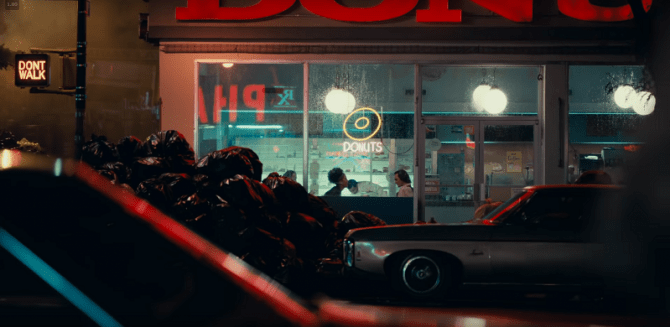
The tradeoff between a high-quality script and Phoenix’s Oscar nomination is probably easiest seen in the garbage strike.  The movie opens with it and it seems like the societal disaffection is going to be built around it, as garbage piles up in Gotham and all that entails.  Instead, that plot line comes to an abrupt halt after Murray Franklin (Robert DeNiro) uses it as a punchline on his talk show.  There are, indeed, a few scenes where we see garbage in alleys, but certainly not suggesting any crisis situation.  The gun is on the wall in the first act, so to speak, but we never find out what happens to it. 

A fundamental issue with the narrative is that the audience has no one to root for, there isn’t a single likable character.  The kids who steal Arthur’s sign in the opening scene are little thugs.  The Wall Street guys senselessly harass the women around them and evidently have a violent streak as well.  What we should take away from Arthur’s would-be love interest (Sophie Dumund) eventually becomes shrouded in a haze, but she isn’t terribly likable, either.  And even the Wayne family is rolled under, with Thomas Wayne making an appearance as an entitled, boorish lout, with disdain for those who live in the city around him.  This doesn’t seem to add up to a city that Bruce Wayne would be inclined to care about, or to a Wayne family name that he would feel obliged to live up to.

As for DeNiro, he seems miscast in his role as a talk show host.  In fairness, the movie has such heavy King of Comedy and Taxi Driver overtones that it is possible he is there just to remind us of the comedy stylings of Rupert Pupkin and the violent outbursts of Travis Bickle.*  Like his Pupkin character, DeNiro is not funny in this role — and funny is something this movie desperately needs.  His motives for grooming Arthur as a potential guest are hazy, is it just for ratings?  Murray Franklin perhaps just represents that even a banal personality becomes larger than life on the back of celebrity.  Arthur is intoxicated by the prospect of that celebrity, and perhaps that’s all there is to it.

As an aside, I think a much better choice for the role would have been Craig Kilbourn.  He’s physically imposing, he carries an aura of entitlement, he has the potential to be biting and smarmy at the expense of his guests, and he is actually funny. A critical point of the narrative is that Franklin is getting laughs at Arthur’s expense;  why not give the audience actual laughs at his expense?  That would have set up an even more uncomfortable establishment comeuppance.** 

On the plus side, I did enjoy the visual characterization of Gotham,  particularly the train shots into the city center and along the river.  I also thought there were some cool tight shots in the stair sequences (the dancing down the stairs is remarkable) and I appreciated the steely gray of the street scenes.  I might see it again to take it in now that the edge is off in terms of the plot.

But, we were expecting more.  A headline for The Economist review says that  Joker is neither perceptive nor politically sophisticated, and that pretty much sums it up for me.  Joaquin Phoenix delivers a performance Gotham’s Joker deserves, but the writers fail to deliver a backstory that anybody needs right now.  What makes a man just want to watch the world burn?  Two hours later and I’m no closer to an answer.


*  We also see further Scorsese influence from Raging Bull and After Hours (and probably others, too).   I was reminded of the Alex character in A Clockwork Orange, but he was charming and likable, making his character even more problematic than Phoenix’s Joker.

** Indeed, this is a movie that the audience in our theater erupted in laughter exactly once, and it was at the expense of a person of short stature precisely because he was short!  As far as metaphors go, I doubt this is a movie that will kickstart any social movements — its audience literally laughs at the misfortune of the little guy.

And that is probably the answer to my question: there are no laughs because this would put us at odds with the movement arising around the clown vigilante.  Presumably, the audience is somehow supposed to buy into that movement without necessarily embracing Arthur as a protagonist?


Brittany Runs a Marathon

Brittany Runs a Marathon focuses on a woman who has come to the realization that she isn’t happy with where she has found herself in life. Starting off at a posh ad agency in The City, Brittany had high hopes for herself and her career.  But, alas, we pick up the story and she is a 197-pound party girl with an iffy job and an iffier circle of friends.  During a visit to her local clinic to score some recreational prescription meds, her doctor gives her an earful about her sorry state of health. Brittany decides she needs to do something, and that something is to start running.

We’ve seen versions of this movie before, of course, but this one has both some originality and plenty of audacity. L&D particularly liked Jillian Bell in the title role, and neither of us for a second believed that she was acting the part because she owned the part.  We agreed that her performance was both seamless and brilliant, even if we felt like scolding her throughout the film. I thought the rest of the characters were extremely well cast, even if I thought the story arcs were either incomplete or bungled for every single character aside from the title character. Even so, the film had some truly enjoyable personalities, especially Jern (Utkarsh Ambudkar), who we loved, and Gretchen (Alice J), who we didn’t.

Thematically the movie is a not terribly subtle homage to the original Rocky film, with a loser in the title role who has an opportunity to transform herself into someone she’d rather be.  Brittany does a really good job of emphasizing that the transformation is both physical, virtually anyone can get their body in better shape (especially people who currently spend an inordinate amount of time boozing and smoking and doing drugs), as well as mental.  The emphasis on the difficulty in changing her own mentality about her identity is well done.  Indeed, this is expressed quite profoundly in a number of spots, including a remarkable scene where her super mean roommate tells her to keep her old clothes, because even if Brittany manages to keep the weight off, she’ll always be the “fat girl.”  Ouch.   It isn’t until Brittany realizes that it is about process and not outcomes that the transformation is complete.

Unlike Rocky, which dispenses of the character’s bitterness early on in the film, Brittany spends a good deal of time holding on to her anger and envy and insecurities, and dishes out her share of punishment throughout the film.  Indeed, my major objections to the film are not that the supporting characters’ are not sufficiently developed or that their story arcs are not resolved in a convincing fashion (they aren’t and they aren’t).  My beef is that the movie is extremely short on reconciliation.  Why do these folks continue to embrace her unconditionally?  She isn’t that funny.

Overall, we are enthusiastic about this one for a great leading role, some great supporting characters, and an enjoyable and thought-provoking storyline. In a year where we haven’t loved a lot of films, this one could creep onto our year-end list perhaps. See it before it’s gone, or catch it on Amazon Prime on the rebound.


Ad Astra

ad astra.jpg

L & D were graced with the presence of our friend F. for the highly anticipated screening of Ad Astra. In this film Producer/Actor Brad Pitt plays an astronaut in a not so distant future who is on a once in a lifetime mission to Neptune. 

Some great lines from F. included when he picked up on a direct quote from 2001: A Space Odyssey, who this film owes everything to. His line about there being “too many stars in this movie” — when Donald Sutherland shows up. And also his parting salvo, during the credits, which was, “It took two idiots to write this?” 

The film also reminded me of some other recent filmic space junk, First Man, the biopic on Neil Armstrong starring Ryan Gosling. For a leading man or woman in Hollywood, an astronaut movie is par for the course. If you were an actor and owned a production company like Brad Pitt does, you would certainly put yourself in the drivers seat of a rocket to Neptune. It makes sense. 

In terms of production value, Ad Astra is out of its mind. Technically and aesthetically, it is really a film that the filmmakers can be proud of. And it has a few memorable suspense and action sequences which I won’t spoil for you. Let’s just say there is a shoot out and a strange thing happens with monkeys. And Tommy Lee Jones. Actually, Tommy Lee Jones does laudable acting work here. He is one of those actors I love on the screen but would terrify me in real life. Like if I had to do anything with Tommy Lee Jones. Like if we were related and had Thanksgiving together, I would have to have a Xanax. Not because he is famous but because he is so intense. Can you imagine? Tommy Lee to L at the table: “Pass the candied yams.” I shudder. And forget about being anywhere near him on set. I would definitely not want to sit by him at lunch. But he would probably sit next to me and start asking me personal questions. This has happened to me during film shoots with celebs. Mostly it’s fine but you never know with intense, method actors. One second it’s, “Have you listened to any good music lately?”  The next is, “Get out of my eyeline!!” I mean, rarely does that happen —but I wouldn’t trust him. Maybe he is just that good of an actor and he is actually the nicest guy you ever met. Maybe. So if you love Tommy Lee Jones, even though he, like Sutherland, is in a minor supporting role here, it’s a strong performance.

One thing about this film is that the plot is absolutely absurd. You have to suspend disbelief almost immediately. And the only way to understand this movie is through the cross references of psychology and Greek tragedy. As an Oedipal story. As an allegory. Ultimately, the grinding pace of this film, the self-reflectiveness and indulgence, bury it. I think if the filmmakers had stuck to a more traditional narrative structure, added just a little more humor and quickened the pace of the story, this could have been a much more engaging and thought provoking film. On the other hand, I’m sure Brad Pitt is satisfied and feels like he said what he needed to say about outer space, humanity and Dads. You could watch Ad Astra or perhaps better yet, launch a laser disc and watch 2001: A Space Odyssey again. 

Hustlers

loez wu.jpg

I hope my wife doesn’t read this review. …Jennifer Lopez plays a street wise stripper with a heart of well…cubic zirconia in the entertaining crime drama Hustlers. Most notable to me was the standout performance of Constance Wu. Her multi-dimensional portrayal of Destiny, a struggling exotic dancer in a toxic relationship, steals the movie. Constance Wu could give Leo DiCaprio a master class on crying in film. J. Lo on the other hand, with her understated performance as queen of a lucrative drug and fraud ring comes off flat in the face of Wu’s transformations. 

The plot reminds me of recent films where women take over a criminal enterprise as men fail or abandon them, for example Widows. It also reminds me of the story structure of Annie Hall, including a montage of good times these buddies have had at the end of the film in reverse chronological order. It’s at times tough to feel empathy for the main characters in Hustlers. They certainly had their fun. And their excuse for the crime spree, “If it wasn’t us it would be someone else.” strains credulity. Two wrongs and all that. However, as a portrait of the power of personality or of a life that spirals as if its moral compass is demagnetized, the film works.

Hustlers has a high production value. Technically, it’s a strong film with impressive makeup, hair, costume, sound design and cinematography. It’s also cast extremely well. Overall, Lorene Scafaria did an excellent job co-producing, writing the screenplay and directing.

I know you are waiting for me to say something about J. Lo. Let’s just say that during the end credits Usher ends up grabbing J. Lo’s famous gluteus maximus (also known collectively as her bootay). I’m sure in a less constrained audience than ours shock waves and audible eruptions occurred. We of course took it all in stride after our most recent viewing of the 3 hour director’s cut of Midsommar. 

There were a few things I really enjoyed about the film and Scafaria’s writing. The backstage banter of the ladies bemoaning their poor sex lives, lack of meaningful relationships, reliance on “massage” units (vibrators, people!) dealing with jealous boyfriends and rip-off managers all made for believable dialogue. Strippers have everyday problems too, it’s not all makin’ it rain and glitter rainbows.  

However most of the characters get a cursory treatment at best. And although the stakes are raised and raised there never is a true payoff. The film just sputters to a close. Esentially Wu carries Hustlers on her back but luckily for us she is more than up to the task. As a side note, you will also learn about the shady practices and ethics of Russian exotic dancers. This film easily vaulted and spun upside down with one leg hooked over the 6 dollar bar. 

Angel Has Fallen

Record

L&D might be in the market to transcribe our conversations, as it seems that we can’t keep up with our reviews.  We took in Angel Has Fallen on opening night approximately a month ago, and we are just getting around to it now.  The verdict is that it wasn’t half bad.  It stars Gerard Butler as a Secret Service agent, Morgan Freeman as the President who loves him, and Nick Nolte as the guy who pees in the hot tub.  Where the story is headed is not terribly mysterious, and it’s tough not to pat yourself on the back throughout for being able to see six steps ahead, who the traitors are, who is going to get killed, and who is going to be still standing when the considerable amount of dust settles.  But mystery is not really the point of Gerard Butler productions now, is it?

Indeed, this is the second time we’ve seen a Butler production in the past year from what appears to be the same production companies and crew.  I would pretty much throw this one in the same bin as Hunter Killer in terms of its male-centered sensibilities, high production values, solid acting, and overall adrenaline rushiness.  Although the movie isn’t terribly original — Butler’s character is sort of a mashup of Jack Ryan and Richard Kimble — it still allows Butler to show more range than with the more robotic caricature of a hardened submarine commander from the previous film.  This is possibly because this is the third in the Angel trilogy (who knew?!?) and this is just where the character has evolved.  Who knows?  I guess my only real observation is that given how it played out, when the antagonist says “Lions” in his dying breath, Butler should not have been so taciturn.  I think “**** ***, *******” would have been more appropriate.

Overall, L&D didn’t need to see (or even know about) the first two to enjoy the third one.  There are probably four or five thrilling scenes in the movie, including some innovative work with drone strikes.  Once DC is rebuilt, perhaps they’ll get around to making a fourth, but for now this one can provide you with way more than your fair share of explosive action if explosive action is your thing.

Ready or Not and Midsommar

ready7

L&D opted to watch the Bears flame out against the Packers this past Thursday night, hence skipping the week’s somewhat slim cinematic offerings.  But that doesn’t mean we haven’t been out and about.  Indeed, over the past couple weeks we managed to see a couple of movies that we were initially reluctant to see, movies that were seemingly as different as night and day…

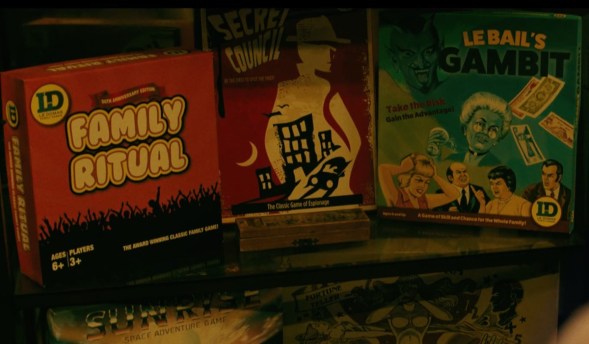
On the night side we saw Ready or Not, and if you’ve seen the trailer for this one, you pretty much know the gist of how it plays out. Grace (Samara Weaving) is a beautiful young family-less woman who is slated to marry into an eccentric family, heirs to a board game fortune.  As part of the spousal initiation, she must draw a card from the family heirloom box that selects a game to play with the family, something mundane like checkers or Jenga. But once every generation or so, the game is hide-and-seek, the kind where the incumbents have until dawn to track down the spouse and sacrifice him/her to the cause, with the cause being another generation of familial fortune.  So, by definition this one is mostly an overnight affair, mostly played out in the confines of a spooky old house, with mostly comedic-style violence, and an ending that is mostly never quite in doubt.

You have to give the filmmakers some credit here:  they gave away the broad strokes of the plot from wire-to-wire up front and they were still able to make thing reasonably compelling. That’s a pretty good trick, isn’t it?  I went in with low expectations and this one soared over the $5 bar.

 

Stackars_lilla_Basse!

That brings us to the day side, where L&D finally got brave enough to take in Midsommar (Ari Aster’s extended director’s cut, no less), where the sun shines deep into the northern Swedish night, and the idiosyncrasies of IKEAesque paganism are out in the open for all to see, at least in principle.

The movie doesn’t start off that way, however, instead setting us up stateside in the dark, dark snowy days of winter, where we see snapshots of the fractured relationship between Dani (Florence Pugh) and her idiot boyfriend, Christian (Jack Reynor).  The opening salvo of a murder-suicide in Dani’s family is troubling enough that Christian decides not to pull the trigger on the breakup, and instead somehow bungles his way into inviting her to tag along with him and his grad student anthro buddies for the Midsommar festival hosted by the commune of his buddy, Pelle (Vilhelm Blomgren).

So that gets us to Sweden, and after a few Shining-esque overheads, director Aster literally turns the world upside-down on us as the kids make their way into the sun-drenched village of Harga; the movie is not light on symbolism. I’m guessing an aggressive Google search would turn up a few hours of reading of the myriad meanings of the white frocks, the various shapes, and the character archetypes trotted out — the intellectual, the opportunist, the skeptic, and, of course, “the fool” (remarkably similar to the anthro buddies I had in college, I might add).

On top of the over-the-top symbolism, the movie isn’t terribly shy about foreshadowing, either.  In good Chekov fashion, if you see a picture on the wall of a woman trimming her nether regions and baking the clippings into a cake in the first act, expect to be pulling that hair out of your teeth before things wrap up, okay?

Between the visuals and the music and the director’s patience with scenes and the hyper-deliberate pace of the plot-lines, the movie does a spectacular job of inducing dread. It wasn’t terribly scary scary, but it was unnerving and more disturbing than your average bear.  The violence has a visceral quality about it that doesn’t show up in most comedic or antiseptic violence that characterizes much of what comes through the theater these days.  It’s a provocative movie.  Indeed, I am still thinking about the face plant and the “blood eagle” all these days later.

Also way over the $5 bar.  L&D approve of this extended message.
 

Succession s

Although these two films are cut from different cloth, they each explore a central question of the day:  how insular groups treat outsiders (with the protagonist(s) being the outsiders in both cases).  Where you want to take this metaphor  — capitalist v. collectivist societies, the upcoming U.S. presidential election — is up to you.

The Ready or Not clan absorbs outsiders subject to a few caveats.  First, these outsiders are selected by a member of the family (i.e., prospective spouses).   Second, the new prospective member must play this game business, which tacitly makes entrance to the family renouncing any previous allegiances. The bride is an orphan and any of her family or friends that were around for the wedding were certainly not around for the wedding night (This is almost certainly done for expositional simplicity, but a reasonable person can connect a few dots).  Then the million billion dollar question is whether the family actually has to adhere to the commitments of its forefathers or not — what are the consequences of reneging on a deal from the past?  This question is somewhat latent through most of the movie, but shows up spectacularly down the stretch.

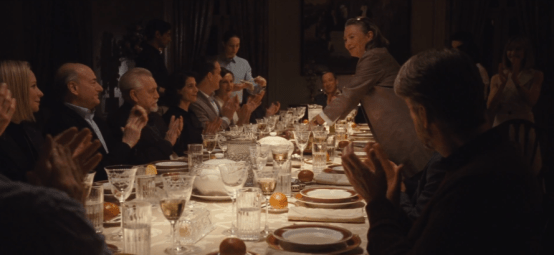
Here is the thesis of the movie:  the really wealthy really are mostly indifferent toward you. They are ruthless, possibly incompetent, certainly deluded, and they get to make most (but not all) of the rules up as they go along.  If you’ve been watching HBO’s brilliant Succession, this theme should resonate with you.  They don’t necessarily have much in common with one another, other than a mercenary intensity in maintaining their lives in the lap of luxury.  At least you know where they stand, right?

Although the community in Midsommar is also pretty selective about who gets to come in, the community here is a true socialist paradise.  They eat together, sleep together, pray together, and do a lot of other things together that you might not immediately think of as community activities. That’s true at least in terms of what is out in the open and bathed in the sunshine.  Who knows what’s going behind closed doors?  Although there is a titular head who is ostensibly in charge, it is pretty clear that that’s not who is actually in charge.  Of course, the community rules are the community rules, but there is more than a hint that these rules are subject to selective interpretation of the higher ups. As a result, the treatment of outsiders is pretty much on a case-by-case basis and by the end here you can probably make the case that there wasn’t much of a doubt about how this one was going to play out.  

Although the movie is ostensibly about a break up, it is much better as a meditation on the pursuit of the collective good, whatever that happens to be.  Pro tip: be careful when someone tells you that your sacrifice for the cause is going to be painless.

Ultimately, I would argue that each of these films explores how we think about and how we treat those outside of our immediate circles, however defined.  More pointedly, each explores the danger and limits of extremism (are there limits of extremism?), whether the source is a self-interested patriarchy or the socialist matriarchy.  The upshot is that maybe night and day have more in common than we are willing to admit.  And, it is possibly instructive to think about which of these worlds is more resilient and durable.

Or maybe that’s just how it is in the movies.

Good Boys

Film Title: "Good Boys"

It’s late summer, the Valley’s fried chicken madness is now at a full boil, and the movies seem to be coming fast and furious, including the ninth installment of the Fast and Furious franchise (which evidently still has a lot to say).

Well, we didn’t see that, but instead bit the bullet and spent our late Tuesday evening watching sixth graders drop F bombs. 

Yes, we saw Good Boys.

As advertised, Good Boys is Superbad light, with the boys being a little younger and the kids’ objective somewhat less sensationally objectionable than in its muse film. The script is pretty high quality and the acting is pretty solid for what it is, though the pacing seemed off to me.  It is pretty funny despite many of the marquee jokes being featured in the trailers, and we did laugh out loud a lot, possibly more than the target audience laughed. Indeed, I think we laughed at a lot of stuff that we weren’t necessarily supposed to laugh at.

A very large portion of the humor involves the disconnect between what we believe sixth graders know and what an over 17 audience knows, particularly pertaining to alcohol, recreational drugs, sex, and adult sex products. Oh, and navigating the suburbs (how exactly should one cross an interstate?). The movie is remarkably restrained in its expression of vulgarity, with the simple appearance of a taboo item enough to elicit laughter in most cases. It’s pretty well done.

This all adds up handsomely for the backers:  the theater was packed, there isn’t a single A-list actor in the movie, and the production budget must have been trivial (though it had considerable promotion campaign). By my calculations, this movie is making the big big money and what they will do with the big big money is probably make more films like this, with the writing quality being swapped out for more explicit verbal and visual content.  I’d put $5 on that.

Speaking of $5, this one is way over that bar with the caveats that you like your humor blue and aren’t offended by kids swearing like actual kids swear when you aren’t around. Clearing the bar is especially easy given Marcus is offering a free popcorn and drink to anyone who flashes this coupon between now and September 2.  We arrived at the theater and our special guest, Bb, was peacocking with his free bounty.

The verdict: it’s not half Superbad.

And that’s pretty good.