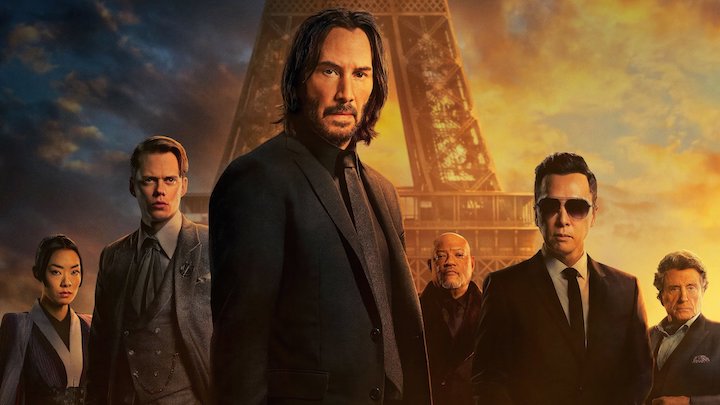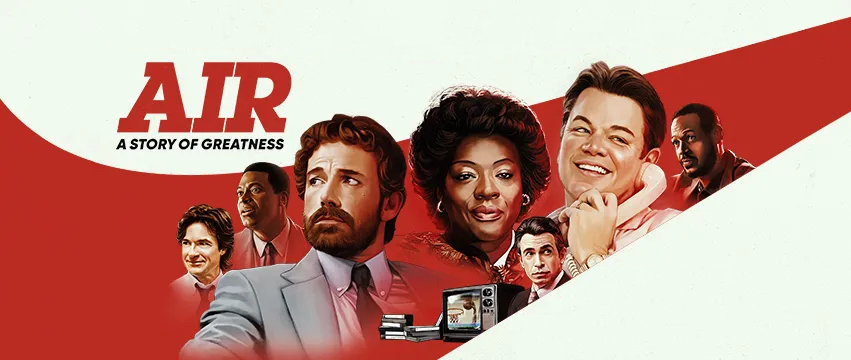
John Wick: Chapter 4

Am I going to reference Cocaine Bear in this John Wick: Chapter 4 review? You bet I am! 

Now, I have said my piece regarding John Wick in a March 11, 2017 essay (6 years ago people!) here on this very blog. Let’s just say it is filed under an undignified LnD category labelled: “Terrible”. Regardless, I am coming around to John Wick. Mostly for the amazing locations and art direction. In terms of its filmic reality, it’s still an absolutely absurd video game, with only the special effect of spawning (when your player kind of electronically buzzes back to life) missing. However (here it is!) unlike Cocaine Bear, the violence in John Wick is essentially abstract. Poofs of blood-like mist emanate from people shot at close range. And the fighting…it’s choreographed like a fantastic dance. Actually, I think it would be cool if they just turned John Wick: Chapter 5 into a musical. Sure, a violent musical, but a musical nevertheless. 

There was a great nod to the famous shots of a match being blown out cutting to a sunrise in Lawrence of Arabia. And the car chase scene around the Arc de Triomphe rivals anything that screeched in the French Connection. So if you are a fan of this series, you will certainly have plenty to cheer about in this installment.  

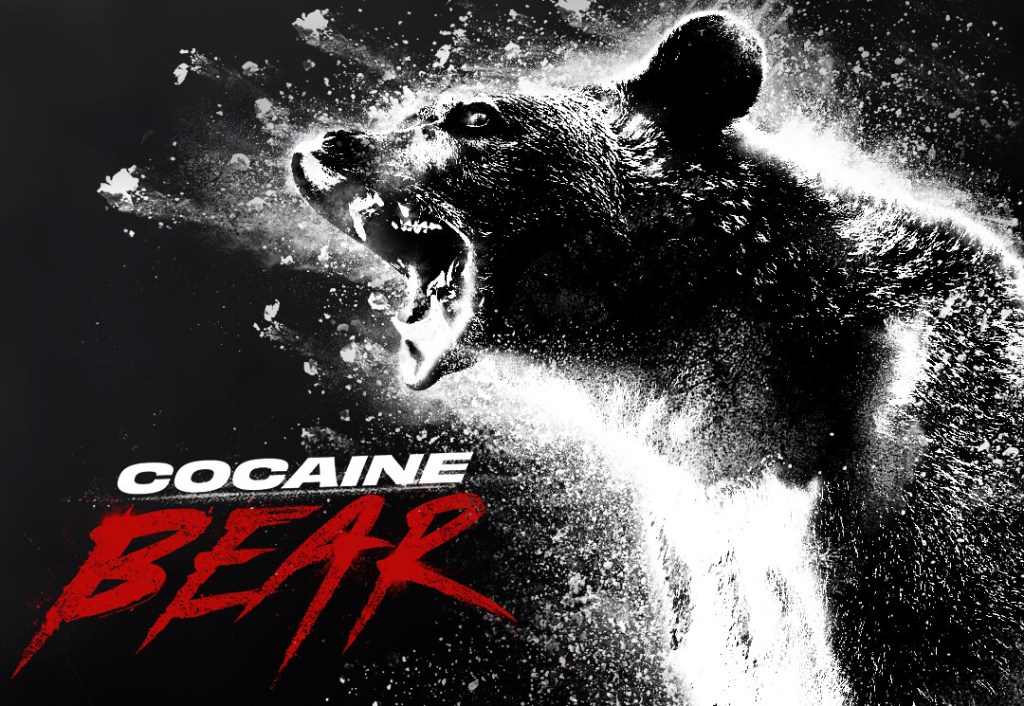
Cocaine Bear

My highly anticipated Cocaine Bear review is finally here. I have milked this bear for zingers for weeks now, so it’s only fair I at least give you, dear reader, a cursory review. But first, box office don’t lie. Let’s run the numbers. Cocaine Bear has been out in theaters for 5 weeks. It’s still a top 10 US release with a total haul of $63 million. Yesterday alone, it raked in $250,000. Not bad for a film that cost $30 million. Adding up the total $19 million internationally, to date our wired ursid has grossed $82 million. 

Huuum.

Is it a good movie? Ohhh. (Deep sigh.) It’s an absurd movie based on events that did actually occur but then are exploded with creative license. It’s alternately funny — though I’m sure we were laughing at the wrong places. Viscerally and gratuitously gory. And held together by some sincere, grounded performances and a few believable bears…and a few unbelievable ones. …And bear cubs! C’mon. That’s not fair. 

As D mentioned while the opening scene unfolded, a movie called Cocaine Bear only has to deliver on two things. And this it does. A Universal Pictures release, there is at least one homage to Jaws, early on, which sets the tone.

The marketing of the film as a horror comedy doesn’t quite get it right. It’s more like a gore comedy. How do I mean? If the sight of someone’s head being partially blown off elicits a shrug or chuckle or perhaps a belly laugh from you — this film was made for you. I’m only slightly squeamish but in general I don’t care for that in movies. I find this kind of normalization of gore to be troubling. This also happened in Violent Night. It’s incredibly, over the top gory. I’ve personally worked on and shot gory, violent movies. It’s not a problem that these depictions occur in films. What grinds my gears is that it is being presented to a mass audience as run of the mill and now mainstream. A cinematic bait and switch. Obviously I’m expecting violence but it’s a lot. There is a film class at a local state university that studies historical times when gore is popular vs times when psychological horror films reign. Maybe this is simply the zeitgeist. All I know is that since Midsommar, I feel like my stomach is on a trampoline at a lot of movies. Thanks, Sweden! 

Finally, Cocaine Bear is Ray Liotta’s final performance before his passing. And it’s a good performance. A solid one. So there is that too.

If you miss Cocaine Bear, don’t fret, my sources tell me that Cocaine Shark is already in production. 

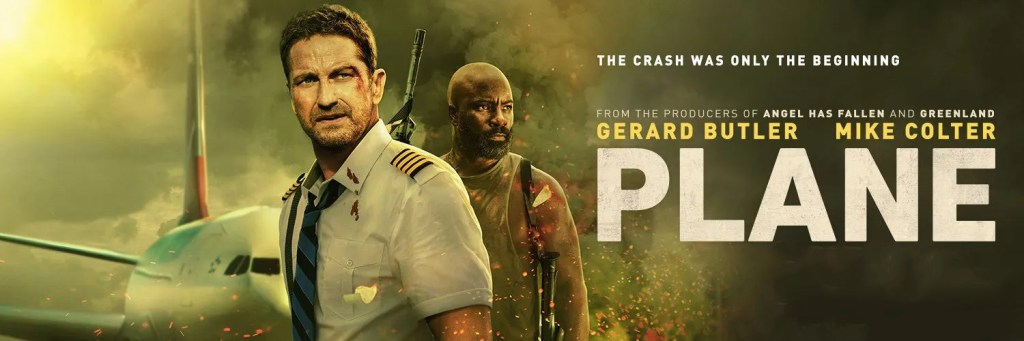
Gerard Butler, Producer, Plane

While enjoying Mr. Butler’s most recent offering as star of Plane, I continued thinking about his credits as Producer. 

LnD first noticed this role in his thriller Angel Has Fallen and so I was intrigued. Butler’s first major Producing credit came in 2009’s Law Abiding Citizen. That film cost $50 million and grossed $128 million worldwide. That’s a healthy start to a producing career. However, Butler isn’t a nominal Producer. He’s a role up your sleeves, develop the script, choose the cast and director type of Producer.

And it shows. The films he makes seem on the surface to be straight to streaming affairs. But as you watch them, you notice the craftwork and talent involved. For example, I was really enjoying some of the cinematography in Plane. There were these artistic shots, contemplative ones, that broke up the action. It showed a concern for and understanding of pacing. Would it surprise you, as it has me, that the film was shot by Cinematographer Brendan Galvin, Irish Society of Cinematographers, who lensed the classic, The Crying Game?

I watched a 15 minute behind the scenes video of Plane on YouTube and it reaffirmed my feeling. Every character, no matter how small a part, has developed a backstory for themselves. None of the players here are just phoning in their performance. Mike Colter, who plays Gaspar, an accused murderer and French Foreign Legion vet, has got all of the conflicting aspects of his character and those of Captain Brodie Torrance played by Butler, down pat. Even though his character is involved in some of the most gratuitous and even absurd violence, since, well since Violent Night, there is a lot of depth to the performance in the scenes where Colter can show his dramatic range. 

As an involved Producer, Butler is tuned in to the story. He is thinking about what happened before and what is going to happen next. He works as a creative partner to the Director. It’s effective, because he chose the director in the first place. They have been partners on the film from its inception. It’s a chemistry that translates to the big screen. And on that note, I encourage you to watch Plane on as big a screen as possible. Not because the special effects are great, they are not. But because you want to watch the true pathos in these performances come through in as epic a way as possible. 

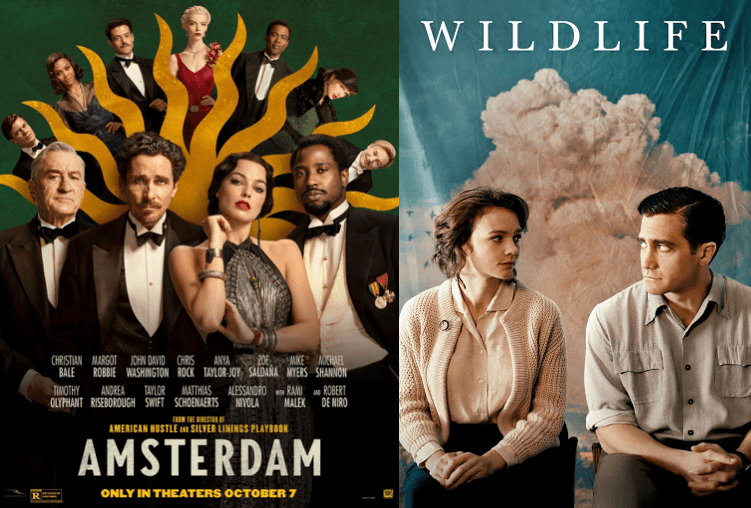
Amsterdam vs Wildlife

I was so uncomfortable during Amsterdam. It was so self-indulgent. I was wondering when it would end. It never seemed to end, though it had long past had anything to say. It was just in love with saying things. 

I wondered what this film would have been like with a halfway decent Director. Then was surprised to learn that it was directed by David O. Russell. It was beautifully shot but some of the shots seemed unsteady, not the greatest. Except the Director of Photography turns out to be one of the greatest, Emmanuel Lubezki. The cast was just a powerhouse of talent. Though they seemed unsure, stepping on each others lines, seemingly uncertain of what to say next. One actor gave the world’s flatest performance. Didn’t the Director notice? Was his note to act like a piece of wet cardboard? 

It was a beautiful film, though. It’s too bad that you can’t just hang each frame in a museum and admire them without the rest. Maybe watch it with the sound off? Even still, there were a few great lines: Are you with someone because you choose them or because you need them? And…If you’ve had your heart broken, well it just means that you were living. Kudos to Russell for some depth there.

This film, which takes place in the 1930s had a certain haunting nostalgia. Meanwhile, the protagonist was doing a major Columbo rip-off. Yet there was no homage to Columbo which could save this film. Like the infamous Jerry Krause, the General Manager who broke up the Michael Jordan era Chicago Bulls, this film didn’t know how to get out of its own way. And maybe we should be grateful because I don’t think there would have been a dry eye in the house if they could have figured it out and pulled it off. 

Meanwhile, I was also able to watch Paul Dano’s 2018 Wildlife starring Carey Mulligan, Jake Gyllenhaal and Ed Oxenbould. Also a period piece, this time from 1960 but with a distinct 1930s flavor. The film’s compositions owed much to Hopper and his isosceles trapezoids, which you can read about in Mark Strand’s Hopper. And Hopper’s light as well. It certainly felt like a depression-era story. And yet, a timeless story. Not nostalgic and unrelatable like Amsterdam’s fever dream. More like the slow burning forest fires that always menace these characters from a far off yet not impossibly distant place. Wildlife is a domestic nightmare, seen from the eyes of its 14 year old protagonist. There is no sledgehammer voiceover here, like in Amsterdam, telling you what to think. The story is told visually. In close-ups of cigar smoking. In tracking shots revealing the sunrise. In fantastic vistas of ever expanding, majestic mountains. It’s an allegory about pride and desperation and it never feels distant. If you get a chance to see Wildfire, it’s well worth the emotional deep dive. 

The Storied Life of A.J. Fikry

I enjoyed The Storied Life of A.J. Fikry but you probably won’t. …This is a film that has a lot of continuity problems. But if you are willing to suspend disbelief (a film phrase right up there with diagetic space, persistence of vision and the martini shot) then you might enjoy it, too. 

Here’s an example. For starters the story is specific to New England, yet the accent is only discernible briefly in one character, in one scene. What gives? On an isolated island like this people wouldn’t talk like they were emerging from an LA nightclub. And I could go on and on. On the other hand, who cares. Not really me, it turns out. This movie has a lot of heart, a lot of spirit, it’s intriguing at times and laugh out loud funny a lot. …So why was the theatre empty? What do people want? More The Ring knock offs? (Smile, I’m frowning at you.) …To ask the question is to answer it, as D would say. 

Well, you know what? They can have all the cheap jump scares they can handle. I’ll stick to the unlikely but still thought-provoking and interesting movies on this side of the megaplex, thank you. 

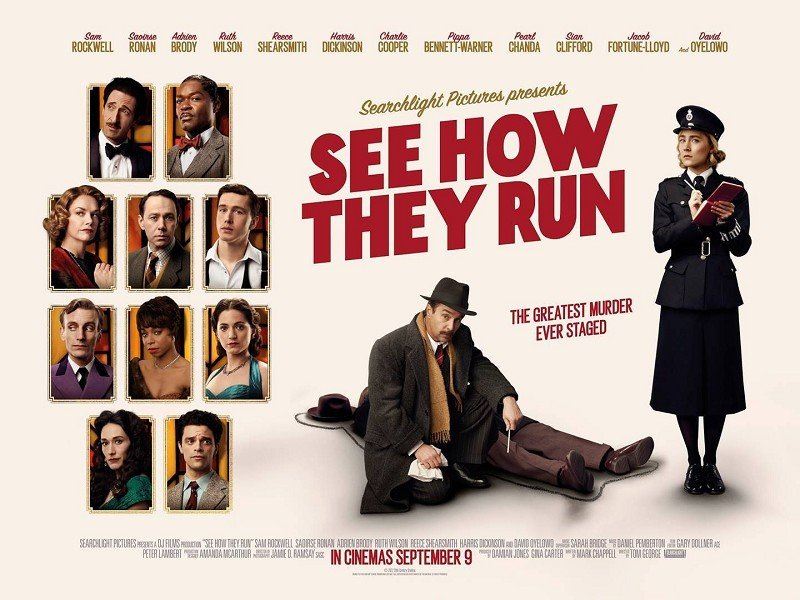
See How They Run

There were quite a few horror films to chose from this week: Smile, Invitation, BarbarianBullet Train. At some point I’ll stop picking on Bullet Train but I can’t get those two hours back so I’m still processing how bad it was. Why are there so many horror films out there? It’s always been a popular genre. Back in my Hollywood days, I even shot one as a Cinematographer, The Unbidden. It got crushed. I read one review and I think I stopped reading reviews of my own work after that. Too painful. On another horror feature I shot, I did film the death of someone who was killed by asphyxiation, with a plastic bag, at night, at a bus stop in Little Tokyo, Downtown LA. I was shooting while standing on a ladder at the time…above the stream of critiques.

But you’re here to read about See How They Run. It’s an original script based on the longest running play in the world, Agatha Christie’s The Mousetrap, in London’s West End. The Mousetrap is circa 28,000 performances at this point. Twenty. Eight. Thousand.

So it took a little something to bring a version of this play, that isn’t this play, to the cinema in a fresh way. I think the film succeeds in that venture, at least cinematically, with a mix of aspect ratios and vertical and horizontal split screens —almost an homage to Wes Anderson. It’s literate, with a voice over by a narrator. It’s loosely a film within a film and a play within a play. The acting is strong, though constrained, by design. Obviously, there is a murder. But the killer fails to take the tongue out of the victim’s mouth…though they tried to do that. It’s not totally clear why but that attempted action is about as gory as this film gets. It seems that we have, as a society, become at least somewhat immune to this type of sadism. I was told that the new Dahmer series on Netflix, “doesn’t really show anything.” Well, besides the severed head in the fridge in episode 1? No severed heads here, rest easy. No one is living in the basement torturing people. Brad Pitt doesn’t pretend to be acting. Nothing like that. It’s just a smart, entertaining movie that perhaps isn’t the greatest thing since sliced bread but certainly checks the box for a fun evening of solid entertainment.

Three Thousand Years of Longing

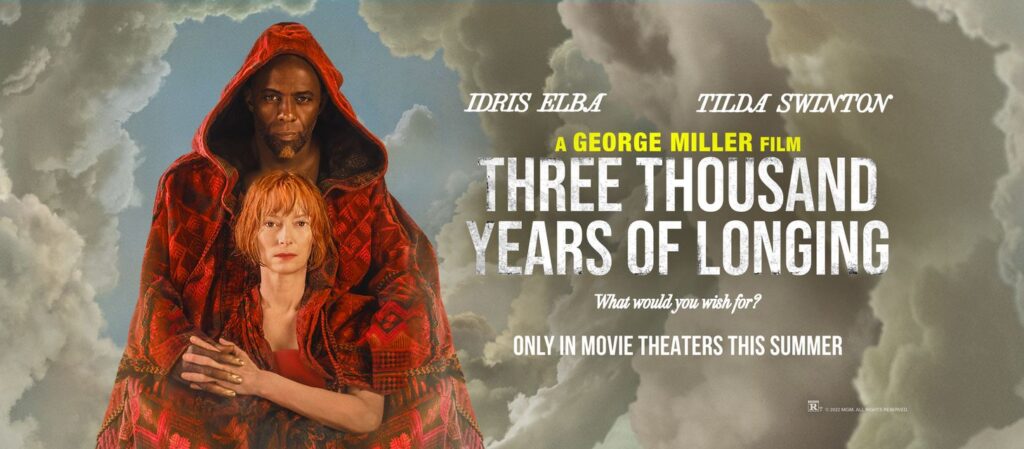
This film is structured like a The Princess Bride for adults. Dr. Alithea Binnie (Tilda Swinton) is having apparitions in the most awkward of situations—though I imagine this circumstance would always be a bit unsettling. However, she’s a hard-nosed scientist, a PhD in Narratology (the study of the structure and function of stories) and on a lecture tour in Turkey. She doesn’t have time for ghosts…or ghost stories. She has read them all…in their original Greek. Except that a djinn named Djinn (Idris Elba) who she unwittingly releases from a bottle she picked up at the Grand Bazaar of Istanbul, has other genie-like ideas. And since he manifests as a giant who takes up her entire hotel suite, he is a little hard to ignore. Djinn’s stories include battle scenes, castle intrigue, a dash of Orientalism and some humor based on corpulent people — I mean laugh out loud, squirm in your seat humor. The film is entertaining. It’s frankly a lot more entertaining than I thought it would be. It’s also expertly directed by George Miller, who you know from the Mad Max films and Babe: Pig in the City.

There are some plot elements that are obvious and telegraphed but the point of the film is the journey and the theme. The theme being, not dissimilar from Life of Pi. That a world culture that has given up on myths, stories and legends, will be quite a sterile, ignorant and terrified one. There is another great scene with Dr. Binnie’s xenophobic neighbors. An elderly female couple. It’s not clear what their relationship is to one another but in the vein of The Muppet Show’s Statler and Waldorf they are disturbingly hilarious balcony dwelling trolls. One of the zingers from this geriatric set include calling the good Dr. a fuckface, which puts a comedic point on their true character. 

On the whole, I was surprised and impressed with Three Thousand Years of Longing. I can’t tell whether it is that it’s such a great movie, but considering the absolute dogs, like Bullet Train to name one, that we have been subjecting ourselves to, I found it an intelligent, funny and welcome reprieve. 

Breaking

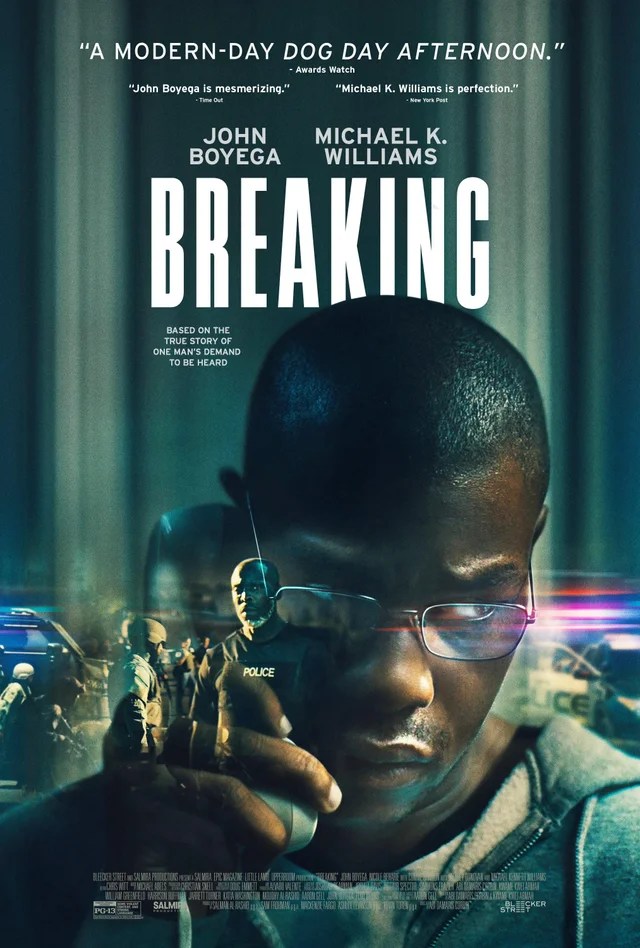
Executive Producer and Actor John Boyega, of Star Wars sequel trilogy fame, gives a strong performance as Brian Brown-Easly, an Iraq war veteran who is suffering from PTSD. Lance Cpl. Easly is apparently not taking his medication and like many, does not have the financial, legal or emotional tools to deal with the injustice he is facing at the Veterans Administration. The film is based on a true story. And according to the credits, to this day the VA still owes him $892 dollars and an apology for siphoning this sum from his Wells Fargo account. 

There are times when I wonder why a film got a green light to be produced. Usually though, this thought is triggered by a bloated Hollywood production where the actors are just phoning it in and having what feels like an elaborate inside joke. Here, it’s the opposite, a long list of no doubt earnest Executive Producers couldn’t catch the obvious or speak truth to power — the film is too literal, there is no strong foil, there is no real conflict, therefore this is no enduring drama that can sustain itself for 100 minutes.  No there, there.

The classic heist film like Dog Day Afternoon was also based on a true story but you’d be hard-pressed to forget Pacino outside the bank with a crowd of onlookers yelling, ”At-ti-ca!, At-ti-ca!”. A reference to the New York State prison and the riot that occurred there, which killed 43 people. This scene was improvised on the spot by Pacino. …It’s a movie. 

The filmmakers seem to want to stay as true to the real story as possible. In that case, this film should have been given to the immediate family as a gift and to the VA as a cautionary tale. But a movie audience expects and deserves more.  The filmmakers were trapped by the truth. That’s not something that is easily forgiven in a narrative film. 

The real difficulty here is that once Michael Kenneth Williams shows up, there is at least a modicum of possibility that this film will take off like a rocket. That all of the introspection and endless phone call scenes will simply be a setup for some spectacular, powerful, even funny action. But it never materializes. Even Kafka has a powerful ending in The Trial. In Breaking, it’s like watching a game winning pass drop out of a receivers hands in the end zone…in super slow motion. 

As for the late great Michael Kenneth Williams, even with both hands tied behind his back, he still lights up the screen and owns every scene he is in. It was like the filmmakers chose to overlook a diamond in a mine to stare instead into the abyss of an empty cinema. 

The Northman

As a survey of both sub-genres in Nordic Death Metal, “OOHHHHHH!!!!!!” and “AAHHHHHH!!!!!!” this film is a cultural tour de force. Otherwise, it’s just a load of macho bullshit. 

Maybe you don’t like hearing that? Maybe you lose sleep thinking about free will and fate, nature versus nurture, Big Mac versus Whopper. If so, and you don’t mind or maybe even love the idea of sitting through 5 beheadings — albeit two are horses — then this movie is right up your alley. 

Maybe it’s your idea of a good time to check out Willem Dafoe wielding a strap-on? Okay. No judgement here. Or you love Björk’s acting (for 10 minutes). Or maybe you haven’t had enough dudity in your life recently. Though there is a thing called the internet that would save you the two hours and seventeen minutes of sitting through this, for that. 

Apparently a few so-called critics are saying the movie is great because it makes Shakespearean connections. …Shakespearean connections. That’s about as profound as saying you noticed that cars have wheels. Every piece of Western literature, including the menu at Norm’s Diner, owes its life to Shakespeare.

Alas, the boneless pork chop / the weak, weak coffee.

It’s all there. 

Now this film, The Northman, is essentially a cross between Midsommar and Conan the Barbarian. However, it’s not as psychologically mind-fucking as the former or as compelling as the latter. It’s certainly not original. Even hallucinogenic mushrooms were more creatively deployed during the Phantom Thread.  The weird thing is that I actually enjoyed ACT I and thought Ethan Hawke played a believable King. Then everything unravelled, like a roller coaster that descends as slowly as it peaked.  

I picked up a book called Italian Folktales recently. It is edited by a writer I love, Italo Calvino. I couldn’t get past the first story. It was simply too absurd. It could be me or as I said, it could just be a bunch of macho bullshit. AAHHHHHHHHHH!!!!!! OOHHHHHHHHHH!!!!!!

The French Dispatch

There’s a certain late night cafe in Los Angeles, in Los Feliz, on Vermont. I was there when Benicio Del Toro appeared suddenly, shadowed by the arch of the door like a cowboy avenger in a Spaghetti Western, busting in on a tavern full of bandits. I don’t think he was after me however. I’m pretty sure he was there for the fries. Then as now, he is a larger than life figure. Intimidating as well as intriguing. Wes Anderson casts him perfectly in the masterpiece, French Dispatch. 

Wes Anderson’s cinematic world is a theatrical one, including light gags, absurd stunts and impossible cross-sectioned sets. His oeuvre is really a celebration of Art Direction. And though the fourth wall is sacred in terms of performance, it is anything but in terms of the actual walls. They are unapologetically shoved around, pushed through and across. If you are wondering where the real wall is, one scene in particular features a prop that is, to great effect, resoundingly smashed right into the camera lens.

Anderson’s films cast a spotlight on our at times absurd behaviors and activities.  In his study of minutiae within the particular style of screwball writing and delivery and cinematographic controlled chaos, he is able to reveal what actually moves people.