Anna

Anna.jpg

Luc Besson’s Anna stars supermodel actress Sasha Luss as the achingly — in the sense that she produces a lot of physical pain for anyone she who gets on her wrong side — beautiful killer in the titular role. The part is somewhat reminiscent of Charlize Theron’s in the take no prisoners action film Atomic Blonde which recieved a double review from L & D. I was interested in watching Anna knowing it was the work of auteur Writer/Director Luc Besson. He is known for one of my favorite films, Leon: The Professional, which was Natalie Portman’s first film and had a great performance by Jean Reno. You also know his work with The Fifth Element and another one of my favorites, Lucy, starring Scarlett Johansson. Lucy is another style first, kick-ass woman in a take no prisoners role. Besson knows how to visually translate style and action from his screenplays.

I’m a fan of unmotivated elements of style in the films I make and watch. Why did the camera move that way? Well, it just felt right. Or, where did that pink light come from? Well, that pink light came from exactly where you think the music in this film came from. It’s not like there is a musician actively scoring your life. Yet music that isn’t actually in the physical reality of a scene (aka non-diegetic sound) is given a free pass in our movie viewing. It’s a little tougher to get away with unmotivated, unnaturalistic elements in terms of lighting, camera movement and editing but it’s something that I appreciate and an audience will get behind or “suspend their disbelief” if it is done well. And to answer the question, the music and lighting all come from the same place, the imagination of the Director. 

Interestingly, most Directors work in obscurity. For example, can you tell me who directed Saturday Night Fever, War Games and Blue Thunder? The answer is John Badham. You’d think that this would be common instead of trivial knowledge. To be known as a Director, it helps to have a distinct style, whether you work within a movement or blaze your own trail. And even then to say something is _________ esque means that you weren’t taken seriously at some point. But also that you stuck to what you thought was the most honest version of storytelling for you — your distinct style. Sometimes films that are made by particular directors don’t have their stamp. Perhaps it was a studio film where they didn’t have control. But in this case Anna is one hundred percent Bessonesque from the John Wick meets Hardcore Henry throwdown in the restaurant to the really beautiful plan sequence (aka oner) in the bedroom closet, which reminded me of the confessional scene in Coppola’s masterpiece, The Conversation. If you have never seen The Conversation on DVD with the audio commentary by sound editor/ designer Walter Murch on, do yourself a cinematic favor and check it out. There are other nods to The Conversaton in Anna as well.

Anna contains a lot of the scenes and elements which we have come to expect from the recent heroine driven international spy genre: the car chase in little European streets, the lesbian love affair, the plain ol’ just ass-kicking of entitled / douchey / know it all men —  and it’s all pretty satisfying stuff. It is also executed with a ton of silky yet heart pumping style. I’m already looking forward to Besson’s next offering.

Men In Black: International

Men in Black: International is chock-full of star power:  Tessa Thompson, Chris Hemsworth, Liam Neeson, Emma Thompson, and a special guest appearance of Kumail Nanjiani.   It is also chock-full of special effects and weird aliens and the like.  What it is not chock-full of is a decent story, suspense, a good villain, or consistent laughs.  It is mostly harmless summer fun, like a snow cone.   Or diet lemonade.

L&D were split on this one, with L seeming to enjoy himself, while D was mostly bored and annoyed.  Nanjiani is certainly mostly solid and often very funny, and is what I would rate as the best part of the movie had it not been for Chris Hemsworth strutting around in pink chinos.

But, ultimately, we have a dull movie.

I will chalk this up to (at least) two major shortcomings.   First, there is no straight man.   MiB worked so spectacularly because Tommy Lee Jones and the staid MiB organization served as a foil to Will Smith’s overall freshness. Ironically, the film took some pains to make Tessa Thompson into the straight man, even though the entire ad campaign around the movie suggested otherwise.   What a mess.   I walked out of International recanting some of the funnier MiB scenes to L that I still remember all these years later; a day out, I’m not sure I remember what was funny about this recent offering.

Second, who is the villain here, anyway?  There are a number of candidates, one becomes obvious, the audience isn’t surprised and doesn’t care.   It concludes with some  Drama-Free Action.

At one point, I was really reminded of the soft spots in the Star Wars movies — lots of aliens and crazy background serving as stand-ins for interesting characters and a compelling plot.   Given the amount of money thrown at this movie, the payoff is abysmal.

We should have seen this coming.   We did see this coming.    The Taco Bell is closed until further notice.

Taco Bell locations were mentioned several times by readers as having long waits in the drive-thrus at various times, and their inside dining rooms were occasionally closed while the drive-thrus were open. 

A call to Pacific Bells, the Taco Bell franchise owner in this area, was not returned.  

A check on the Taco Bell on Appleton’s east side, which was identified by readers as having sporadic issues, showed it was currently open and staffed. But it had reduced hours, now closing at 8 p.m. instead of the advertised 2 a.m.

TBI don’t lie.

Shaft

Shaft.jpg

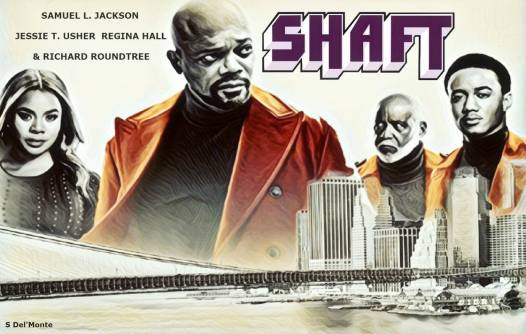
I think the Taco Bell by the movie theater has finally closed down. Maybe there aren’t enough people to work there anymore? — We are winning, America! — And so it was prophesied that L & D sat in an essentially empty and quite large multiplex theater to see Samuel L. Jackson star in Shaft. The film started off on shaky ground with some intensely stiff acting and dialogue. But luckily for everyone involved it loosened up once Mr. Jackson arrived on scene. 

If you’ve ever watched any Blaxploitation films, say on the Bounce network, (which I get on TV airwaves here in Northeastern Wisconsin — though if that’s not enough for you, Bounce owns Brown Sugar, a 1970’s era Blaxploitation on demand service) there’s one common denominator, namely low production value. Bad, I mean bad! lighting, awkward, I mean distractingly awkward! editing and poor, piss poor! composition people. Is there a reason for this? I’m sure there is. The reason has to do with low budgets. Those days are gone, as the new Shaft has the production value of a James Bond film. The lighting, camera movement, wardrobe, art direction and sound are of the highest caliber. The film has enough confidence in itself to make light of the genre. For example, when Shaft is about to enter a shady nightclub, there is a blatant smoke machine hidden behind a trash can spewing way too much non-motivated smoke. It’s confusing at first until you get the joke. Then, in a most excellent scene, Shaft is in the apartment hallway of his ex-wife. He is at her door, pleading to be let in, when he is interrupted by a neighbor who gives him the stink eye. Suddenly the groovy music winds down like someone pulled the plug on the Rev. Al Green 33 that was spinning on your record player. As soon as the neighbor gets a look at Shaft’s gun, he is terrified and slams his door — the song cranks up to speed again. It’s a great breaking the fourth wall moment. 

I would be remiss in writing about Shaft without mentioning the great African-American writer of hardboiled novels and social narratives, Mr. Chester Himes. If you’ve never heard of Chester Himes, click on that link already. He delighted many readers and inspired many writers and filmmakers with his series of nine Harlem Detective novels. It’s safe to say what Raymond Chandler is to Hollywood, Chester Himes is to Harlem. And with this in mind, I really enjoyed Shaft. I have no idea if I was laughing at the appropriate places but I was definitely laughing. Even D, who was not impressed with the wobbly opening, started laughing. There is just something about Samuel L. Jackson, he really is like a funky Mr. Miyagi. After all, he has already portrayed a Jedi Master. Also, in one scene he reminds us that he is tired of the Laurence Fishburne comparisons! 

At its core, Shaft is a generation-gap-father-son film. It at least acknowledges that times have changed, even if it sticks to stereotypes. However, the stereotypes are with tongue firmly planted in cheek and with the good intention of the audience having a little fun. Of course here, the good guys win through violence, the Dad teaches the kid how to be a proper manly man and the women in the film either step aside, need to be rescued or forgive the unforgivable — or at least the truly shitty. It’s still a Blaxsploitaion genre movie but Shaft does have his heart in the right place even if sometimes his actions and words betray him. His character flaws and redeeming values are identical to Himes’ hardboiled heroes.

Yeah, it’s a family movie if your family eats expletives for breakfast, doesn’t mind people getting shot up with AK-47s and finds glitter all over a bare chest quite amusing. I’m not going to tell you if I found it quite amusing. I’m also not going to tell you where the glitter was on Shaft. In the final analysis, Shaft checked all the kick up your feet and enjoy a summertime movie for 6 bucks boxes but it wasn’t a great movie and certainly something you could enjoy in your La-Z-Boy recliner or loveseat at home. Also, motherfucker. A lot.

Us

us.animated.gif

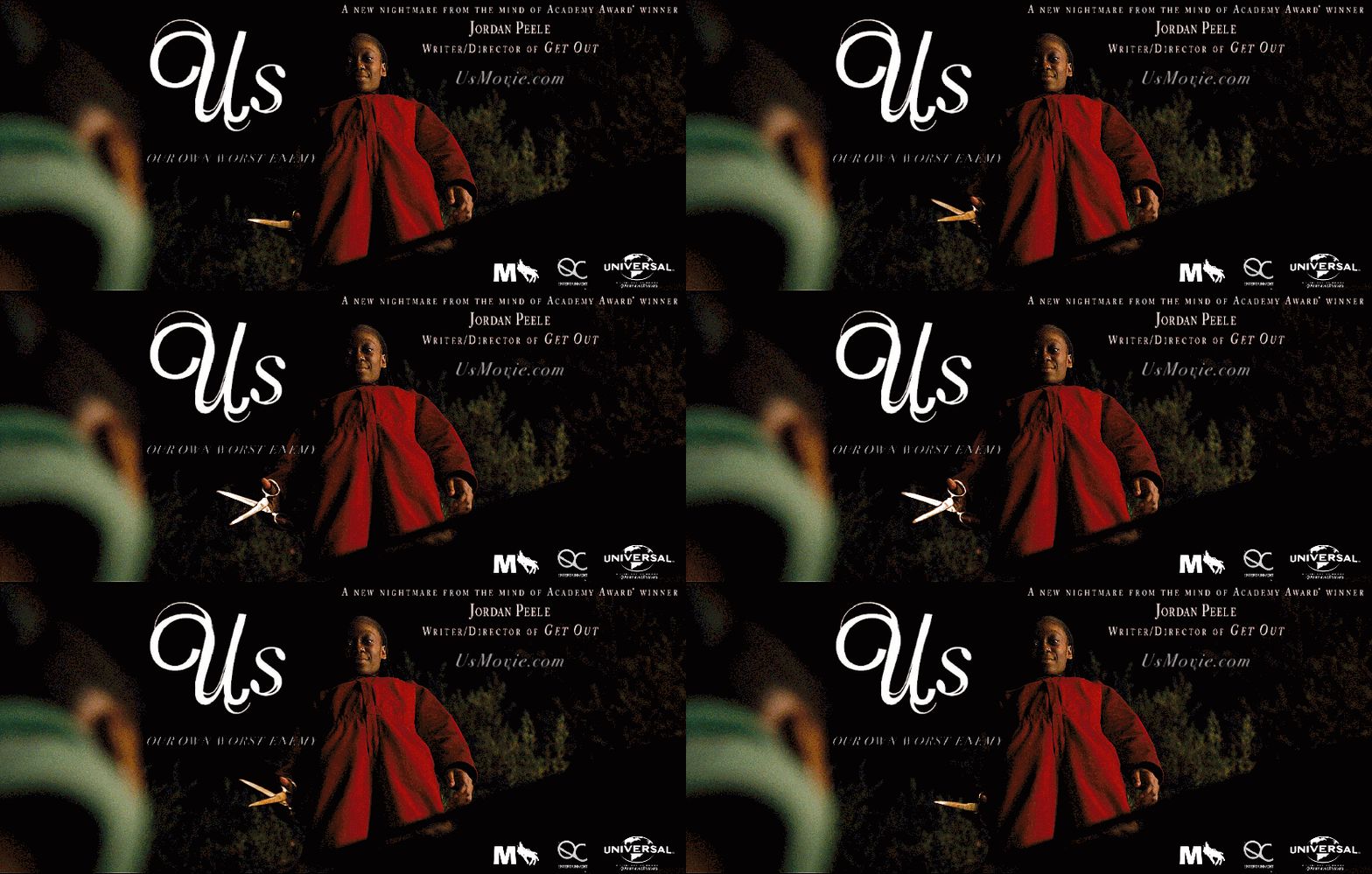
Us is a bad LSD trip the inner mind of Jordan Peele is having that we, the audience, communally share.  As a former Banana Slug, I can attest to the utter appropriateness of Santa Cruz as the location. It’s a proudly weird place, a vortex of time and space, a living breathing acid test in motion. The film draws inspiration from and pays homage to some pretty varied sources, most notably Dante’s Inferno (but also Dante’s Purgatorio), Oscar Wilde’s The Picture of Dorian Gray, the Bible, The Shining, The Lost Boys, Stranger ThingsHot Tub Time Machine, Zombieland, Thriller, Charlie Chaplin’s City Lights, Jaws, Black Flag, Bernard Herrmann’s iconic scores for Alfred Hitchcock, Childish Gambino’s This is America music video etc. etc. etc. And it’s all tastefully and often humorously done. 

Our clerk at the concession stand did an amazingly good job summing up the movie, even though his tag said his favorite film was La La Land. His 1 minute critique was concise, precise and didn’t include any spoilers. He said it was not a horror film but more of a slasher, suspense film that was very entertaining and had a great ending. We replied — Yes, we would like butter. We would always like butter.

The density of the film in terms of references and symbols made D and I both come to the conclusion that we could watch this film many more times and still not be able to get everything Jordan Peele was trying to express. And at least for me, that’s okay. Us made my heart beat fast for its entire 2 hour and 1 minute run time. When I was using the restroom after the film, absolutely everything was freaking me out. The sound of the paper dispenser, the feel of the water faucet…my senses were certainly heightened in a way I hadn’t felt since Besson’s Lucy had me freaking out, sweating and staring at all the surveillance cameras on the traffic lights in L.A. 

In the sense that Us has a profound ability to move you, Us wins. The plot is most certainly flawed, the density of references and meanings may turn off some people but ultimately, it is a thought provoking allegory and entertaining film. If some gore, violence and blood don’t turn you off, I’m sure you will heartily enjoy Us. In Slug parlance…doood, the flick is a total trip. 

Ben is Back

Ben is Back Still.png

Ben is Back takes on a pressing issue in our society, the onslaught of opioids that have flooded our communities, as drug overdose deaths have tripled since 1990. This morning I was reading an article, “Massachusetts Attorney General Implicates Family Behind Purdue Pharma in Opioid Deaths” about a company so obsessed with sales that it paid 600 million in fines for intentionally misleading the public about the addictive qualities of OxyContin. The kicker being that even after that admission and pay out the company expanded its efforts, sending even more sales reps to convince doctors, nurses and pharmacists to prescribe even more Oxy. Why? For perspective, one company memo details how through overprescribing just two doctors made the company 800,000 in only two years. 

I believe Ben is Back will find an audience with the people and families who most need a message about addiction. Even though it plays like an extended Afterschool Special, with implausible situations that make you ask yourself, what exactly are the elements of an interminable movie? After a moving Christmas Eve mass scene, the plot shifts gears into modern day parable territory. A Dante’s Inferno meets Dickens’ A Christmas Carol mash up. It’s a good technique for the story but the pretext motivating the plunge back into the depths of Ben’s utterly messed up and devastating life choices seems flimsy at best for one so easily triggered. One character says out loud, “This doesn’t make any sense. What we are doing is not worth it.” I understand characters’ statements like this as a verbal agreement between the filmmakers and the audience. It goes something like, “We don’t actually expect you to suspend disbelief but if you don’t leave we can tell you what we have to say, which you will agree is a good message.” 

I am not saying that I could have come up with a more convincing story. Or that telling a story like this is easy. I actually sympathize with this film and feel like the filmmakers and actors were trying their absolute best. The film does boast powerful performances by Julia Roberts as Holly, Ben’s ever hopeful and grieving mother, Kathryn Newton as Ivy, the skeptical with reason sister and Lucas Hedges as a convincingly angsty Ben, who knows that there is little he can do in the face of this crippling curse, his addiction. The situation is as terrifying as A Quiet Place but even more so because we all know that this national scourge and personal tragedy is happening in real life as we speak.

In spite of the strength in the acting, production value and sentiment in this film, the parts don’t ever come together to form a greater whole. The cause is a meandering story that strains plausibility and telegraphs its plot points miles ahead of when they occur. However, this is an intelligent film with a lot of heart that also has the possibility of spurring on conversations around this most critical of social issues. It may not rise to the level of a classic family drama as say Ordinary People but Ben is Back will provide a powerful message for those closely dealing with the problem of addiction and as a cautionary tale for many others. 

Vice

L&D took advantage of some Marcus Rewards to see Vice on bargain Tuesday,  and after some minor hiccups with the cashier, we made it in to see an alarming trailer of an upcoming Topher Grace film, Breakthrough.   In good trailer tradition, we now know the plot pretty much exactly, and L&D will likely be able to skip that one altogether.

Of course, we were there to see Vice, writer-director Adam McKay’s portrait of former Secretary of Defense and Vice President, Dick Cheney, and we thought we pretty much knew what was going to happen in this movie, too.  So, really, we were there to see if Christian Bale’s portrayal is all that it’s cracked up to be — it is, he’s brilliant and gets it right, the pause, the sneer.  Bale is not the only big, big star here, with Amy Adams playing Lynne Cheney, Sam Rockwell as George W. Bush, and Steve Carrell as Donald Rumsfeld.   Adams is very good and Carrell starts out really strong and fades a bit, while Rockwell doesn’t really get much to work with beyond something just above an SNL-type portrayal.  Good work if you can get it.

The movie is fine, really, funny in parts — the first end-credits bit was pretty clever — but ultimately it turns into a polemical hit piece on Cheney.  This is somewhat amusing because the film makers were obstinate that this was based on the facts.  Even if that were true, which it probably isn’t, there are many facts that are omitted, on the one hand, and many connections that are somewhere between tenuous and ridiculous.

On the first part, consider the complete omission of the Iraq war under President George H.W. Bush.  It was during that war that Cheney and General Colin Powell emerged as a tandem with real star power.  Here’s the take of Slate’s, Fred Kaplan, who certainly knows plenty about Cheney’s career:

The film …barely mentions the first Gulf War, during the presidency of George H.W. Bush, when Cheney was secretary of defense. This is no small matter: The fact that the elder Bush won that war but left Saddam Hussein in power had an influence on how the younger Bush and Cheney viewed the second Iraq war a decade later.

Another reason for McKay’s brush-off of the first Gulf War may be that dealing it would have forced him to confront the fact that, even by the estimate of his critics (including me), Cheney oversaw that war—and handled his duties as defense secretary broadly—with open-minded professionalism. McKay begins the film by having his narrator say that when Cheney became vice president, nobody knew much about him. In reality, he’d emerged from the Gulf War an admired celebrity. In his many press interviews at the time, he came off as an emblem of cool competence…

This is why so many people who observed Cheney under Bush Sr. (including me) were so stunned and puzzled by his fanatical turn under Bush Jr.  What changed? Had the three heart attacks blocked some of the oxygen to his brain? Was it the sheer scare of Sept. 11? Was it his belief that, in the wake of its Cold War victory and the Soviet Union’s implosion (an important contextual event the film ignores), the United States could get away with a more aggressive foreign policy and, therefore, should? In the film, from the time of his ascent to high power on, he undergoes no change and thus there’s no need to explain it.

That is my emphasis in spots, because I really couldn’t agree more with those quotations.  I lived in DC during the bulk of the first Gulf War, and remember watching the Cheney-Powell show with some legitimate DC insiders.  He was masterful and definitely admired from both sides of the aisle, regardless of what your thoughts on that war were.  That entire Kaplan piece is a pretty good summation of my view on the “facts” in this one.

As far as the second point goes — some of the conclusions the film makers seem to draw about Cheney’s influence — it seems unlikely that Cheney is responsible for political polarization, ISIS, global climate change, the California wildfires, and the rise of Fox News, but I suppose it’s possible.  The expansiveness of the indictments and the black-hat, white-hat nature of the narrative is degrading to those in the audience with cerebral capabilities.

In the end, you might enjoy it no matter your politics.  I talked to someone today who said that their conservative father thought the movie was “satire,” rather than a biopic.  It has its moments.  It certainly has more than it’s share of star firepower.

The Mule

598168050_XS

After battling off illness and a last-minute cancellation last week, L&D finally made it out to see The Mule at the fabulous Marcus $5 Tuesday special.  As we are both on pre-holiday diets, we bypassed our free popcorns and headed straight into a reasonably crowded late showing.

The verdict?  Well, to paraphrase Lloyd Benston, it’s no Gran Torino (HT: L). In the plus column we have some very good and probably memorable performances by Clint Eastwood and Bradley Cooper, the former in the title role and the latter the FBI agent out to get him.  After that, the movie just isn’t that compelling. If you’ve seen the trailers, you probably have a reasonably good idea how this all unfolds.  The third lead, Ignacio Serricchio as Julio, the handler, doesn’t get his own subplot and consequently doesn’t quite add up. Laurence Fishburne and Diane Wiest are each given one note to play and are uninteresting.  That said, we did like Andy Garcia as the affable cartel head, much better than those meanie thugs that want to replace him, that’s for sure.

That’s not to say that there isn’t a lot to like.   In addition to the solid lead characters, the production is pretty crisp and the movie has more than its fair share of tension.  Unfortunately, the back stories and supporting casts — Eastwood’s family, Cooper’s family, the Cartel drama — don’t add up to a story that will stay with us.  Indeed, the movie is based on a newspaper article, which isn’t terribly surprising given the strong central story line and the less fleshed out supporting material.  My guess it’s staying power will be about as great in your memory — you’ll remember the headline and a few details, but more as an anecdote than as a thesis.

So, solid fare, over the $5 bar, nice enough, but it’s no Gran Torino.

Can You Ever Forgive Me? & Green Book

CYEFMAGB.png

There are a lot of commonalities in Can You Ever Forgive Me? and Green Book, though it may not be apparent on the surface. For starters both are period pieces, early 1990s and 1950s respectively, at least in part both are New York stories, both depict the real life of an LGBT person without their sexual identity being the focal point of the story and they are buddy movies about artists. 

Another aspect these films share is that the trailers are absolutely useless. Even the great zingers in these films build up over time. The writing is fantastic and the laughs are meaningful, not forced from an armlock. YOU’RE LAUGHING, RIGHT? 

Performance-wise Melissa McCarthy shows off an impeccable range. It’s a devastating, funny and realistic performance. You don’t doubt her portrayal of author and literary forger Lee Israel for a single moment. 

Mahershala Ali’s performance is spot on as sophisticated piano virtuoso, Dr. Don Shirley and his Odd Couple routine with ever impressive Viggo Mortensen brings out the real humanity and depth of both of these characters. “I understand that life can be complicated” says Mortensen’s Tony Lip, a man otherwise known more for his knuckles than his compassion. Their adventures on a music tour in the segregated deep south of not so very long ago America brings our history to light in a truthful and in between the laughs, heartbreaking way. 

These films are Oscar worthy in various artistic and technical categories. If you are looking for funny, deep, thought provoking, well-crafted, historical and yet personal films to watch, I recommend Can You Ever Forgive Me? and Green Book to you. 

The Front Runner

The-Front-Runner-YouTube-730x410.jpg

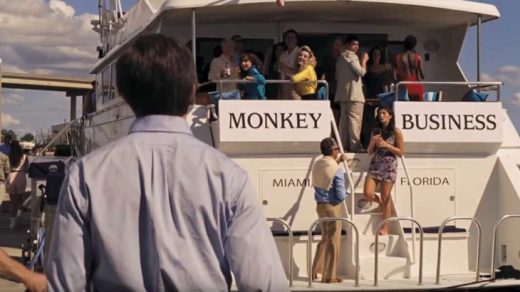
How could any film honestly dealing with the life of Gary Hart not be called Monkey Business? Even if there were already several other films about him titled Monkey Business, that would be no excuse. As Chappaquiddick is to Kennedy, Monkey Business is and always will be to Hart. 

That these filmmakers chose to call this movie The Front Runner set me up to viewing it skeptically. They must be Gary Hart apologists, I thought. And it does seem that way as the film bends credulity in trying to have you somehow sympathize with a man who after becoming the lead candidate for the Democratic presidential nomination in 1987, decided to charter a boat, Monkey Business, for a week long trip to Bimini. Here he openly has an affair with one Donna Rice. It comes at a point in American culture when suddenly the private lives of public figures like politicians were fair game for the traditional press. This could be due to the rise of cable TV, the 24 hour news cycle, the perception that the tabloid press was becoming more mainstream, all of the above and perhaps even other factors. The point being that Gary Hart flaunted his indiscretion and simply shrugged it off. 

After his affair is revealed, Hart doesn’t get the implications and completes several tone deaf moves like arguing with the editor of the paper that exposed him at the podium of what was ostensibly an economic forum and coming up flat in his response to a press conference question, “Have you ever cheated on your wife?” Defining moments for his candidacy. 

The film is especially annoying in that you are supposed to somehow feel that Hart is an anti-hero who is trying to protect all of our privacy rights. When in the end it is Hart who is calling for the spotlight on himself. At one point daring the press to follow him. So what did he expect and what are we left to think about him and his sense of judgement and character?

There is one great opening shot, a fantastic oner that floats around an on-location TV broadcast outside Hart’s hotel and captures the milieu around a presidential race. Otherwise, the film generally clunks along cinematically.  If you are a political wonk, or get into films where people take shots at each other while doing logistics and PR  around a table, some of this film might work for you. Or maybe you are a history buff and are simply curious about this episode in American political and pop culture. Okay, I can see that. But otherwise this film doesn’t do anyone justice and is the visual equivalent of stubbing your toe.

Even the casting is way off here as Gary Hart was never so buff and Hugh Jackman seems like he is about to sprout Wolverine’s metallic fangs at any moment and gouge a few reporters. Instead of maybe taking his foot off the protein powder pedal and transforming more into the actual physique of the character, Jackman doubles down including a moment where Gary Hart is doing push-ups at a meeting. It’s laughable, in the worst way.  Instead of watching Monkey Business, why not toss a few National Enquirer copies on the yule log this holiday and fire up Three Days of the Condor?

Free Solo

freesolo.jpg

Free Solo is a movie that sneaks up on you. It’s a National Geographic documentary so you might at first be like, “Meh. How entertaining will this possibly be?” But it’s extremely entertaining and thought provoking. Suffice it to say that at an utter fraction of the budget of the next film we saw, Bohemian Rhapsody, Free Solo has enough raw intensity and emotion to make ten rock bio-pics. 

It actually took me a day or two to process everything I saw and experienced watching Free Solo.  I won’t say more because I don’t want to give anything away. There is one Achilles heel in the film for me and it’s the portrayal of the main characters’ girlfriend. There is a lot of drama built up around her, suggesting she is a bad influence or some type of bad luck that for me is unnecessary. Attempting the ultimate free solo, i.e. climbing the face of El Capitan in Yosemite without the aid of ropes, seems like more than enough of an obstacle for drama. She does however suitably relieve the intensity of the climb preparation in comical scenes where they contrast one another. For example, the scene where they buy a house in Las Vegas is pretty classic. You see Alex Honnold for the wild man he is, eating food out of a pot with a wooden spoon and talking about how he would be happy to sleep on the floor. 

If you take the time to watch this movie it’s something that will actually give back to you and enrich your life. There are not many movies you can say that about. And definitely catch it in the theater so you can truly appreciate the scale of this almost unimaginably epic undertaking.