Power

Power JPG.png

In the last calendar year and in this year so far, the political biopic, i.e., biographical movie, has been a constant movie occurrence. Or is it eternal? It seems we will always wonder about the lives of people who shape history. 

In this essay I cover some of the political biopics that caught my eye and moved me one way or another. Though there are others, the recent depiction of Winston Churchill comes to mind, that don’t make the cut here. 

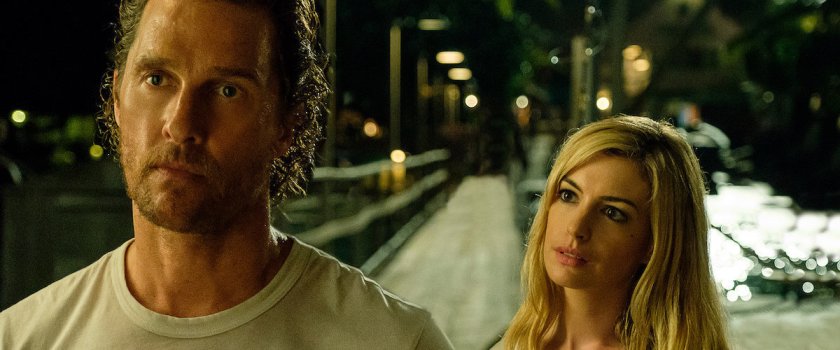
But let’s take these: L and D’s top film of 2018, The Death of Stalin, Chappaquiddick, The Front Runner, The Favourite, Mary Queen of Scots, Vice and On the Basis of Sex. 

One of the foundational rules of filmmaking is to show, don’t tell. Just keep that in your back pocket as you read this. Another rule of thumb is that in a short film, having one strong protagonist is the best way to keep an audience involved in the story. And you can extrapolate that to features. It’s easier to keep the audience if your film isn’t meandering or involving many points of view. There are exceptions of course. The most recent Murder on the Orient Express had a fantastic cast and even though I deduced who the murderer was in the first 5 minutes it didn’t fail to captivate me as a story. A film can also cover many years and still be powerful, it’s just more of a challenge. Citizen Cane does a good job of it. As I said, there are exceptions. Now if it were just a case of dramatizing a given situation, some kind of winning formula, I wouldn’t have had one of my greatest movie going disappointments, Sully. Moments after take off a plane crashes into the Hudson River. The pilot is able to land the plane without loss of life. Sounds like an incredible movie but really, it’s just an incredible moment. There is no formula for a hit movie, just some guidelines. 

I won’t rehash our review of The Death of Stalin here. Suffice it to say, you get to know Stalin in the exposition. You witness his death. There is a mad power vacuum that ensues. Society, which was absurd and unjust during Stalin’s lifetime, threatens to absolutely unwind in the time shortly after his death. The performances are outrageously good. It’s a true masterpiece of dark humor and grim reality. It gracefully paints a portrait of one dramatic moment in time.  It trusts that you understand something of the workings of the Bolshevik revolution and something of what happens after the time in question. 

Chappaquiddick and The Front Runner are films that needed to come out around the time of the incidents they portray. They are past relevancy, poignancy.  They, Like Mary Queen of Scots, would have you support protagonists who are well past complicated and simply obstinate. I would say that the Mary Jo Kopechne drowning scene in Chappaquiddick is so powerful that you could never argue that the filmmakers are Ted Kennedy apologists but they are not far from it. And though that film does concentrate on a specific moment in time, the drama gets completely bogged down in rooms and meetings. It fails to show as it falls back on telling, on merely depicting people talking into phones and scheming. “But that’s what happened” you could argue. Well, it’s not cinematic. 

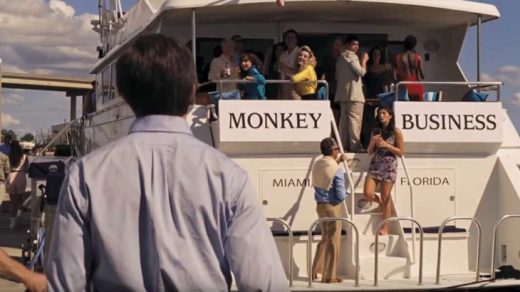
The Front Runner also gives us a clueless presidential candidate who seems totally out of touch with the times. But it does smack of apology for bad behavior. I will never get over how the defining moment for presidential hopeful Gary Hart was a trip on the boat Monkey Business but it is somehow not even the title of the film.  In the film there is a scathing one minute monologue by Johnny Carson via a TV set Hart is watching.  The entire film is summed up by Carson. Like Chappaquiddick, Front Runner tries to milk this one defining moment and devolves into representations of phone calls with his wife and spin meetings with his staff.  Talking not showing.

Mary Queen of Scots certainly does a fine job of depicting action. There are plenty of horse rides, a battle, a stabbing and even a decent explosion. But if you have a political character that’s not likable, whose motives aren’t honorable or who feels entitled and again, out of touch with the people, all the action in the world will not save that story. There is also plenty of staring into space by the protagonist, the movie seemingly falling in love with its very existence. There is also no backstory whatsoever besides titles. I’m not sure if titles are even worse a sin than talking vs showing in film. Again, there are always exceptions, like the opening titles of Star Wars. One of the more interesting aspects of another film I will get to, Vice, is the depiction of the early, more formative years of Dick Cheney. You may never agree with him but you understand where he is coming from and his drive for power. This never happens with Mary Queen of Scots. The audience never gets invested in her story. 

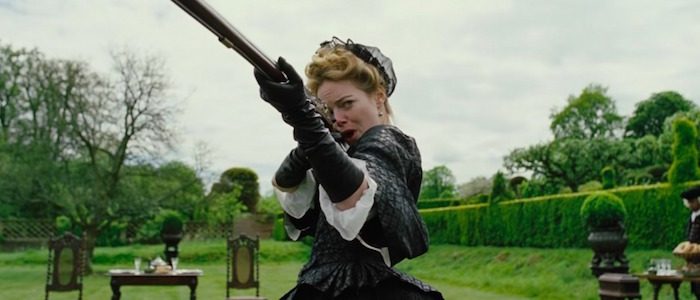
Which brings me to the aptly titled, The Favourite.  The audience here is instantly invested in the fortunes of a former lady as she attempts to regain her status in proper society. As the intrigue at Kensington Palace thickens the feeling of suspense only grows. There is plenty of blood and guts, scars and plain ol’ wild outbursts in this film. You understand exactly the perils which the protagonist must endure, the indignities she has to suffer and the level of cunning needed to ascend. It’s a startlingly good performance by all of the main players and easily a top L & D 2018 pick had it been released sooner. But to go over what works, it focuses on a main protagonist, during a specific time period with well established obstacles and goals. As each scene should have obstacles and goals for the players so should each film for its story.  It’s completely cinematic at every opportunity and lets the audience sympathize with the plight of the protagonist and share in her plots, schemes, victories and defeats. There are moments when the star of this film stares off into thought, but those are moments of gravitas that are not overused and therefore dulled or self-serving. 

I had high hopes for Vice. It starts off strong enough, as we discover the ne’er-do-well Dick Cheney. The man is a simple mess, looking at life through the bottom of a beer bottle. This really sets the story up nicely. However, it goes off the rails, at once blaming Cheney for every ill in society since 1974 and trying to excuse his politics. The side splitting laughter of then secretary of defense Rumsfeld when asked by Cheney, “What do we believe in?” is all you need to know. It’s tough for an audience to get behind a character whose own moral compass blows with the wind. And perhaps to answer why he did what he did in a word would be — power. Because he could. The yin to the yang of Alex Honnold free solo climbing El Cap is Cheney being the puppet master behind the 2003 Iraq war.  

Vice’s meandering is quite unlike On the Basis of Sex, which is a beautiful and elegant movie that surprised me with a succinct narrative. Cinematically told with great period shots of Harvard, Denver and New York City. Focusing on Ruth Bader Ginsburg’s days at college, starting out as a professor and eventually arguing a case before a federal appeals court.  It didn’t try to cover all of her cases and therefore the story never gets muddled. It stays specific to one early case, complicated enough to be interesting yet simple enough to be enjoyable. And obviously we follow the one main point of view, Ruth Bader Ginsburg’s, as it evolves into the voice of a generation who fight to set a new legal landscape for women in America. 

So power can be represented in many ways. There is no formula for a successful political biopic film. But there are things that work. Letting the audience get to know the characters, their early lives and motivations. Remaining cinematic throughout the film and not getting bogged down in conversations and static shots of one actor on a phone in a small room. Understanding that one event alone does not make a film. Not trying to cover too much historical ground but creating a story around specific defining moments. Establishing a few simple obstacles and goals that the audience can be involved in as the protagonist strives and achieves. Is it easy to make a great film? It’s not easy.  But it’s fair to say that of this most recent slew of biopics only a few filmmakers have been able to surpass this high bar. 

The Favourite

the fave emma stone.jpg

As D mentioned right after we watched it, The Favourite was the best film this year in its depiction of power relationships. I would agree, though our top pick, Death of Stalin and another great one, Phantom Thread, went a long way in that regard as well. 

The Favourite goes for it in terms of artistic license and cinematic technique: stylistically, in its depiction of sexuality, choreography and language.  It is a bold film. Yet its visual style at times didn’t work for me. Panning on a Steadicam with an ultra wide lens on, unless you are after some type of motion sickness, is not a great idea. We get it, Kensington Palace is massive, you want us to see that. Okay. But just trade up a few focal lengths, stop down a smidge so you can keep deep focus, and guess what, Kensington Palace is still massive!  Steadicam does achieve a sort of sweeping kinetic energy and those shots were reminiscent of the masterful Russian Ark (2002) — a feature film shot at the Hermitage Museum in Saint Petersburg, accomplished in one historically long shot. Russian Ark is impressive to say the absolute least. However, I don’t think it was necessarily the best technique to employ for The Favourite and it did seem to me that as the film moved on it was used less and less. However, this particular technique wasn’t the end of the world for me, I prefer bold choices in production. It’s just a choice I would have adjusted or used sparingly. Royal intrigue to me plays much better on a tripod or a dolly. Something more stable. But Queen Anne is so unstable! you might opine. —But is she? 

With the Steadicam following Abigail (Emma Stone) around, I half felt like I was in some type of time warp reflection of the Iñárritu masterpiece Birdman, where Stone plays Michael Keaton’s somewhat reckless but also caring daughter Sam, a recovering drug addict. Another masterful performance. There are few actresses who can hold an entire film together with so little as a fleeting glance, Emma Stone is one. In fact, Stone’s performance here is so strong that if she is not nominated for an Academy Award, I shall have to relive myself in the royal vomit bucket— there is apparently one in every room of the palace.

The Favourite moves right along, with many eyebrow raising twists and turns. And with Olivia Colman playing Queen Anne, the puppet master between Abigail and Lady Sarah (Rachel Weisz) most skillfully, nary a moment is lost in this tightly spun narrative.  

It may have slid in too late for our 2018 best of picks but The Favuorite would have been right in there with the top contenders. 

Can You Ever Forgive Me? & Green Book

CYEFMAGB.png

There are a lot of commonalities in Can You Ever Forgive Me? and Green Book, though it may not be apparent on the surface. For starters both are period pieces, early 1990s and 1950s respectively, at least in part both are New York stories, both depict the real life of an LGBT person without their sexual identity being the focal point of the story and they are buddy movies about artists. 

Another aspect these films share is that the trailers are absolutely useless. Even the great zingers in these films build up over time. The writing is fantastic and the laughs are meaningful, not forced from an armlock. YOU’RE LAUGHING, RIGHT? 

Performance-wise Melissa McCarthy shows off an impeccable range. It’s a devastating, funny and realistic performance. You don’t doubt her portrayal of author and literary forger Lee Israel for a single moment. 

Mahershala Ali’s performance is spot on as sophisticated piano virtuoso, Dr. Don Shirley and his Odd Couple routine with ever impressive Viggo Mortensen brings out the real humanity and depth of both of these characters. “I understand that life can be complicated” says Mortensen’s Tony Lip, a man otherwise known more for his knuckles than his compassion. Their adventures on a music tour in the segregated deep south of not so very long ago America brings our history to light in a truthful and in between the laughs, heartbreaking way. 

These films are Oscar worthy in various artistic and technical categories. If you are looking for funny, deep, thought provoking, well-crafted, historical and yet personal films to watch, I recommend Can You Ever Forgive Me? and Green Book to you. 

I Fellini — Essay

271771.jpg

Federico Fellini’s I Vitelloni and Amarcord are often called autobiographical films but that is only partially true. They are inspired by actual events but those are merely the jumping off points for his creations. Take Rimini, a 4 hour drive to the Northeast of Rome on the Adriatic Sea. Fellini’s hometown. But he never shot a single frame of film there. He would return only at night and for brief periods. He didn’t want a flood of emotions to take over his imaginings. 

A Fellini character is not present in I Vitelloni. The characters depicted in the film are in their late 20’s. Fellini himself left Rimini at age 19. But he would have seen the vitelloni hanging out all night in the cafe. He would have personally known a few, even if just in passing. He would have heard their stories and legends.

He does share a similarity with one of the characters —the one who leaves. Otherwise, I Vitelloni can be considered a snapshot in time. It’s similar to the buddy movies that would come along later, Levinson’s Diner, Linklater’s Slacker, Noah Baumbach’s Kicking and Screaming, Ben Stiller’s Reality Bites. People, frozen in time and place, making due with their dreams and the best they can to reach them. Even if the rest of the world looks at their efforts and finds it not much.

If the world of Fellini were represented in a Dadaist connect the dots, the numbers to connect would be 1, 24, -52, 19, -8, 107 and then the images: a cross, a woman’s tush in a tight dress, a lonely soul walking in the night, a race car driver tearing through a town square, an exasperated, screaming adult, a naive newlywed, a little person, a strong man, an alluring acrobat, a circus clown and finally dots in a shape to make the face of Fellini himself, the ringmaster of dreams. 


The Front Runner

The-Front-Runner-YouTube-730x410.jpg

How could any film honestly dealing with the life of Gary Hart not be called Monkey Business? Even if there were already several other films about him titled Monkey Business, that would be no excuse. As Chappaquiddick is to Kennedy, Monkey Business is and always will be to Hart. 

That these filmmakers chose to call this movie The Front Runner set me up to viewing it skeptically. They must be Gary Hart apologists, I thought. And it does seem that way as the film bends credulity in trying to have you somehow sympathize with a man who after becoming the lead candidate for the Democratic presidential nomination in 1987, decided to charter a boat, Monkey Business, for a week long trip to Bimini. Here he openly has an affair with one Donna Rice. It comes at a point in American culture when suddenly the private lives of public figures like politicians were fair game for the traditional press. This could be due to the rise of cable TV, the 24 hour news cycle, the perception that the tabloid press was becoming more mainstream, all of the above and perhaps even other factors. The point being that Gary Hart flaunted his indiscretion and simply shrugged it off. 

After his affair is revealed, Hart doesn’t get the implications and completes several tone deaf moves like arguing with the editor of the paper that exposed him at the podium of what was ostensibly an economic forum and coming up flat in his response to a press conference question, “Have you ever cheated on your wife?” Defining moments for his candidacy. 

The film is especially annoying in that you are supposed to somehow feel that Hart is an anti-hero who is trying to protect all of our privacy rights. When in the end it is Hart who is calling for the spotlight on himself. At one point daring the press to follow him. So what did he expect and what are we left to think about him and his sense of judgement and character?

There is one great opening shot, a fantastic oner that floats around an on-location TV broadcast outside Hart’s hotel and captures the milieu around a presidential race. Otherwise, the film generally clunks along cinematically.  If you are a political wonk, or get into films where people take shots at each other while doing logistics and PR  around a table, some of this film might work for you. Or maybe you are a history buff and are simply curious about this episode in American political and pop culture. Okay, I can see that. But otherwise this film doesn’t do anyone justice and is the visual equivalent of stubbing your toe.

Even the casting is way off here as Gary Hart was never so buff and Hugh Jackman seems like he is about to sprout Wolverine’s metallic fangs at any moment and gouge a few reporters. Instead of maybe taking his foot off the protein powder pedal and transforming more into the actual physique of the character, Jackman doubles down including a moment where Gary Hart is doing push-ups at a meeting. It’s laughable, in the worst way.  Instead of watching Monkey Business, why not toss a few National Enquirer copies on the yule log this holiday and fire up Three Days of the Condor?

Widows

widows.jpg

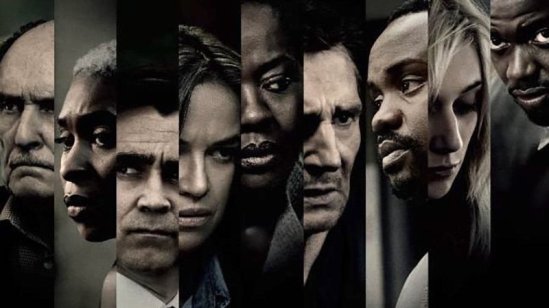
I wasn’t expecting much from Widows. File under: don’t judge a movie by its trailer. However the cast, particularly Viola Davis, Elizabeth Debicki and Cynthia Erivo —who also lit it up in Bad Times at the El Royale — where stellar. Even Liam Neeson does some acting, in a film where remarkably no one gets kidnapped. There are also strong supporting performances by the incomparable Robert Duvall who brings it as a potitical machine patriarch and Jacki Weaver as Debicki’s mom who does some serious Joan Crawford channeling. The musical score was handled deftly by Hans Zimmer who is to film scoring what Morgan Freeman is to narration. 

Widows has an interesting mix of being a heist movie and a love story all in one. And like the best heist movies, it has a certain humanistic gravitas. The theme of living with loss is heavily explored. Chicago politics and crime is constantly on the surface of this story without pulling the characters’ relationships under it. My favorite shot in the movie is an exterior car oner (a single shot, with no editing) where you never see the actors but hear their conversation. The dialouge is about being trapped in a golden cage and in the real time of this drive of about 4 minutes the entire neighborhood changes from poverty to wealth. Widows is no stranger to gory and shockingly violent moments—but it’s not more violent than the This is America music video. Plenty of violence is implied and one murder happens completely off screen as the volume is turned up on a TV set. But the film carries a slow simmering tension throughout which is punctuated by sparks of graphic violence being perpetrated by many of the main characters. No one is absolutely without guilt in this modern take on Robin Hood. The characters are complex and grounded with enough backstory that you care. Widows has the immediacy and realism that Ocean’s 8 could only wish for — Awkwafina aside. The stakes are epic and unlikely but also within the realm of believability given the circumstances of the story. 

There are moments where the pacing lagged for me. Moments where actors are staring at themselves in the mirror too long. However these were a mere annoyance in what is a beautifully shot and crafted film. There also happens to be a very good twist in Widows that I won’t reveal to you.  Regardless of story, the acting here is the real star. I would recommend Widows on the performance of Viola Davis alone.

Free Solo

freesolo.jpg

Free Solo is a movie that sneaks up on you. It’s a National Geographic documentary so you might at first be like, “Meh. How entertaining will this possibly be?” But it’s extremely entertaining and thought provoking. Suffice it to say that at an utter fraction of the budget of the next film we saw, Bohemian Rhapsody, Free Solo has enough raw intensity and emotion to make ten rock bio-pics. 

It actually took me a day or two to process everything I saw and experienced watching Free Solo.  I won’t say more because I don’t want to give anything away. There is one Achilles heel in the film for me and it’s the portrayal of the main characters’ girlfriend. There is a lot of drama built up around her, suggesting she is a bad influence or some type of bad luck that for me is unnecessary. Attempting the ultimate free solo, i.e. climbing the face of El Capitan in Yosemite without the aid of ropes, seems like more than enough of an obstacle for drama. She does however suitably relieve the intensity of the climb preparation in comical scenes where they contrast one another. For example, the scene where they buy a house in Las Vegas is pretty classic. You see Alex Honnold for the wild man he is, eating food out of a pot with a wooden spoon and talking about how he would be happy to sleep on the floor. 

If you take the time to watch this movie it’s something that will actually give back to you and enrich your life. There are not many movies you can say that about. And definitely catch it in the theater so you can truly appreciate the scale of this almost unimaginably epic undertaking.

The Old Man & the Gun

MV5BOTk3NjU5MjIxM15BMl5BanBnXkFtZTgwNjU0OTU2NTM@._V1_.jpg

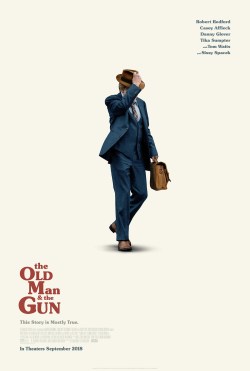
I wish more movies were made like this. The Old Man & the Gun is a simple story, told by a cast of superstar actors in the most understated yet intensely dramatic way.  

The cast alone is a joy to behold as they light up the screen. Sissy Spacek, Danny Glover, Tom Waits and Robert Redford in what is supposedly his last screen appearance  — we shall see. I actually worked on a movie with Danny Glover once called Supremacy. It was pretty cool being on set with him. He is a sweet dude. I can only imagine it was a kind of enchanted set with these greats just riffing away on some solid writing. 

There is a certain theme in TOM&TG which is, “Why are some people compelled to destructive behavior even in the face of their own eternal happiness?” Perhaps because your idea of eternal happiness is not theirs, even though they would like it to be…life would be much simpler and enjoyable for them that way. 

In the canon of heist films TOM&TG doesn’t tout the madness of Dog Day Afternoon, no chants of “At-ti-ca! / At-ti-ca!” here. Or the violence and naturalism of Hell or High Water. The crime itself isn’t the main point. It’s a fait accompli. Some of my favorite moments were things like the Tom Waits monologue about Christmas or Redford and Spacek’s first time sitting down for coffee, just shooting the breeze while we know he’s on the lam— and her calling him on his crap. It’s genuinely smart and amusing and real in its own right. It’s not Acting but acting and its great.

It’s interesting that as a period piece, TOM&TG is also filmed in the style of the period. In other words, it tells a story from the early 1980s with the same style or look films had in that general era. You almost feel like you are in a Three Days of the Condor fever dream. To that end, the film also comes through with some seriously laudable art direction.

So do yourself a favor and catch this one at some point when you want to watch a good film. 


Bad Times at the El Royale

BAD-TIMES-AT-THE-EL-ROYALE_POSTER-e1535472118923.jpg

You know you love the movies when you are able to watch the first few innings of your favorite baseball team in the MLB playoffs and figure well that’s that it’s movie night and I’ll find out who wins when I get out of the movies. Then, when the movie lets out you discover it’s the 11th inning and that the big and I mean enormous screen in the lobby of the movie theater is still paying the game. I was rooting for the Dodgers and everyone else was a Brewers fan, including one sweet old lady next to me who by the 12th inning, around 1:AM, was like, “Someone get a run I gotta go home and get some sleep.” All to say that it’s fun to have some extra community at the movies. One of the best things about baseball is going to the game and just being with people. I like to keep score at baseball games and there is always an oddball like me in every section to commiserate and compare notes with. I suppose you could say that I also like to keep score at the movies i.e., this blog. And as to the oddball I commiserate with, well…have you ever met D? 

Now how about Bad Times at the El Royale? We here at L & D are well known to rock our theater entrance perfectly after the trailers…since we can’t stand trailers. For this film in particular we were off and sadly saw various versions of trailers over the past several months. It certainly affected my experience. Are trailers before a movie passé, now that you can watch a trailer on demand on your smartphone?  

One thing that watching Bad Times at the El Royale sprung at us almost immediately were the similarities to an L & D all time favorite, Francis Ford Coppola’s undisputed masterpiece, The Conversation. If you have never seen The Conversation, please stop reading here. I will make a makeshift digital bookmark for you so that you know where to come back to once you have seen it. Okay here is the bookmark IIIIIIIIIIIIIIIIIIIIIIIIIIII ….So how was it? Pretty awesome, right? Now you see what the big stink is about Gene Hackman, right? So the first thing we noticed was the floorboards get torn up, just like the last scene in The Conversation. Then, a suitcase is opened with all the accouterments necessary for wiretapping, and many bugs are discovered in the room.  That’s two. Three, the suit which another character wears is a see-through rain jacket, exactly like the kind Hackman wears. Four, a confession to a priest occurs. There are more than likely other Conversation inspired aspects we didn’t pick up on in this viewing. When we checked with our confidential informant at the front desk, they did mention to us that the film had many Pulp Fiction like aspects. This must be a reference to the non-linear story. But the Tarantino film it reminded me more of was The Hateful Eight, with most of the action taking place in a remote mountain lodge. Of course, no suspense film would be without its Hitchcock references. Here most plainly to the Bates Motel in a rain storm in Psycho and to Rear Window with the voyeurism involved and even in the composition and literal framing of the inner workings of the El Royale.

The film can boast many positives, the acting is fantastic. Jeff Bridges is at his best. Cynthia Erivo drops a powerful, moving and at times jump out of your seat thrilling performance. The set design deserves an Oscar nomination and on down the line. The film is incredibly well-crafted and easy on the eyes. As I mentioned, the non-linear, at times repeating narrative certainly worked for me. As D openly rooted for the film at the start, the totally perfect set up needed to be continued. But after the untimely death of one of the main characters and then the addition of a not so believable character, the film flounders. Several people are killed in this film in a sort of so what type of way. But a lot of this blasé emotion is rescued by some biting dialogue and fierce acting.

Overall, I enjoyed Bad Times at the El Royale and though it may not reach the heights of the other films I referenced in this review, not many films do. At the same time it’s at least as good in terms of acting as The Hateful Eight so I would recommend it on that alone. Huzzah to Writer/Director Drew Goddard and DP Seamus McGarvey who also happened to shoot another favorite of mine, High Fidelity, which takes place in Chicago. D is Cubs fan. 

A Simple Favor

A Simple Favor.jpg

The funny thing about A Simple Favor is that it’s funny. The director and editor come from comedic backgrounds and have worked with Judd Apatow. The editor, Brent White, actually cut Talladega Nights, Anchorman and 40-Year-Old Virgin. With A Simple Favor the influences of Hitchcock, Apatow and as D ever so aptly nailed, De Palma are plainly evident.  The film is truly cinematic and could just as easily be enjoyed with the sound off. However, there are clever moments like the too many croutons in the Caesar salad loud crunching sounds at dinner, alluding to following the breadcrumbs of this mystery.

As you faithful reader are aware, the L & D are a known quantity at the Appleton Valley Grand Marcus Theater™ and our confidential informant behind the ticket counter immediately let us know that Stephanie Smothers (Anna Kendrick) uses some spicy language in this one. I promised to use my earmuffs. Meanwhile, Emily Nelson (Blake Lively) really is the one who rips a blue streak here. She’s a Porsche drivin’, Gucci wearin’, heat packin’, double martini with a lemon twist drinkin’ at noon badass…who doesn’t give a fuck. Our c.i. missed this entirely. 

On the suspense side, the film reminded me of one of my recent favorites, the under appreciated The Girl on the Train, starring Emily Blunt. On the style and sort of goofball factor side there are plenty of homages to De Palma. For example when someone gets slammed by a car —which you know, would normally knock you out— but instead gets on their knees and then punches a guy in the nuts…that’s very DePalma to me in the given context of a mystery film. And also very Apatow, in any context.

I won’t say more here except to say, A Simple Favor is an enjoyable, sophisticated, humorous, slightly absurd but never off the rails, tightly spun tale that keeps you wondering what will happen next the whole way through. It’s really a wonderful little film that I hope to watch again and again.